Online sources are unreliable for the visual identification and basic biography of Joaquín Pardo de Tavera y Gómez. Google results and highly visited websites often confuse him with other members of the Pardo de Tavera family. I asked fellow historians but none could offer a definite visual identification of the important historical figure. So I consulted the Pardo de Tavera archive at the Ateneo de Manila University Library, with the assistance of its incredibly helpful staff, in search for primary materials.
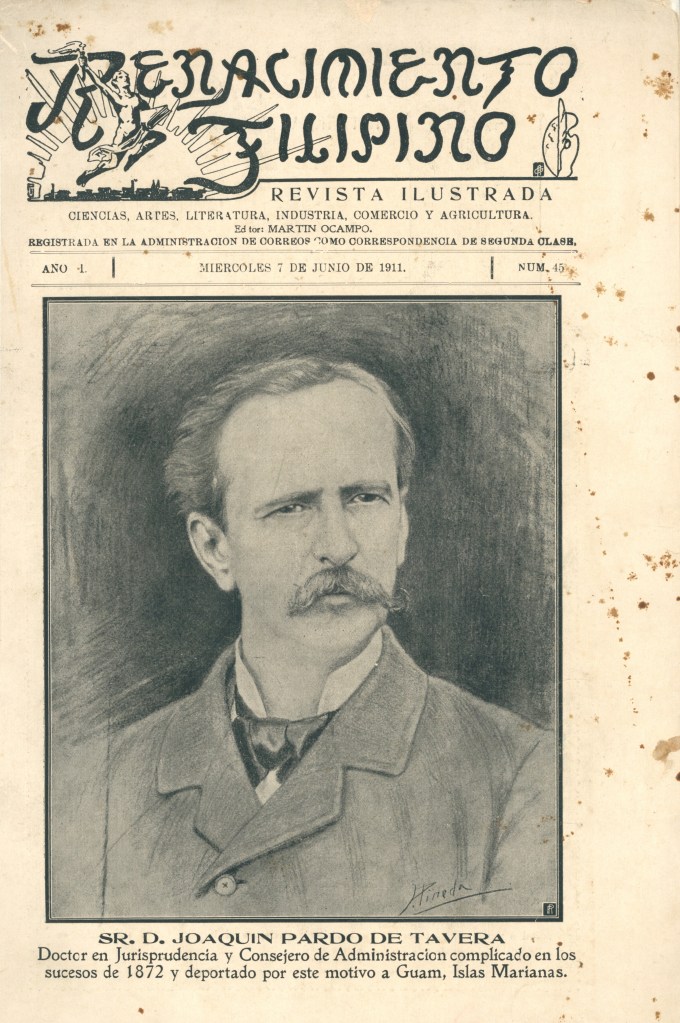
The issue of Renacimiento Filipino dated 7 June 1911 published a captioned portrait of Sr. D. Joaquín Pardo de Tavera, identifying him as a doctor in jurisprudence, councillor of administration, implicated in the events of 1872, and deported to Guam in the Marianas.
A friend sent a video of his tomb inscription which gives the corrected dates: born in Manila on 9 November 1829; died in Paris on 19 March 1885. Previous records state he was born on September 19, 1829 and died on March 19, 1884 (I think this was because they read the dates in the American style, with the month first)
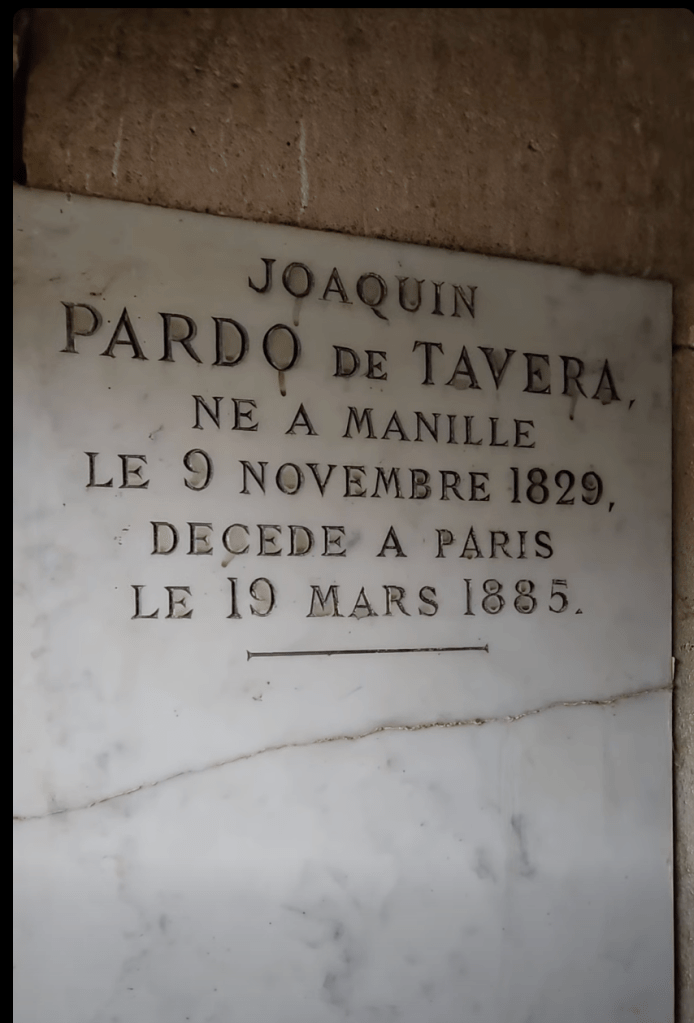
Joaquín Pardo de Tavera y Gómez (9 November 1829, San Roque, Cavite – 19 March 1885, Paris) was a Filipino jurist, educator, and reformist active in the late Spanish colonial Philippines.
He was born to Julián Pardo de Tavera, a Spanish army lieutenant from Toledo, and Juana María Gómez, both identified as Spaniards (Artigas 1996, 45; Manuel 1955, 312). He was one of two children who reached adulthood; his brother Félix became the father of Trinidad Hermenegildo, Félix Pardo de Tavera, and Paz Pardo de Tavera. Joaquín later assumed a central familial role as uncle and surrogate father within this household.
He received his preparatory education at the Colegio de San Juan de Letran and entered the University of Santo Tomas in 1849, completing canon law in 1852. He subsequently pursued derecho patrio, qualifying as a lawyer in 1857 (Manuel 1955, 312–13). Shortly after, he declined an appointment as relator of the Real Audiencia due to ill health. He later briefly served as lieutenant governor of the Batanes Islands, a post he did not hold for long (Artigas 1996, 46).
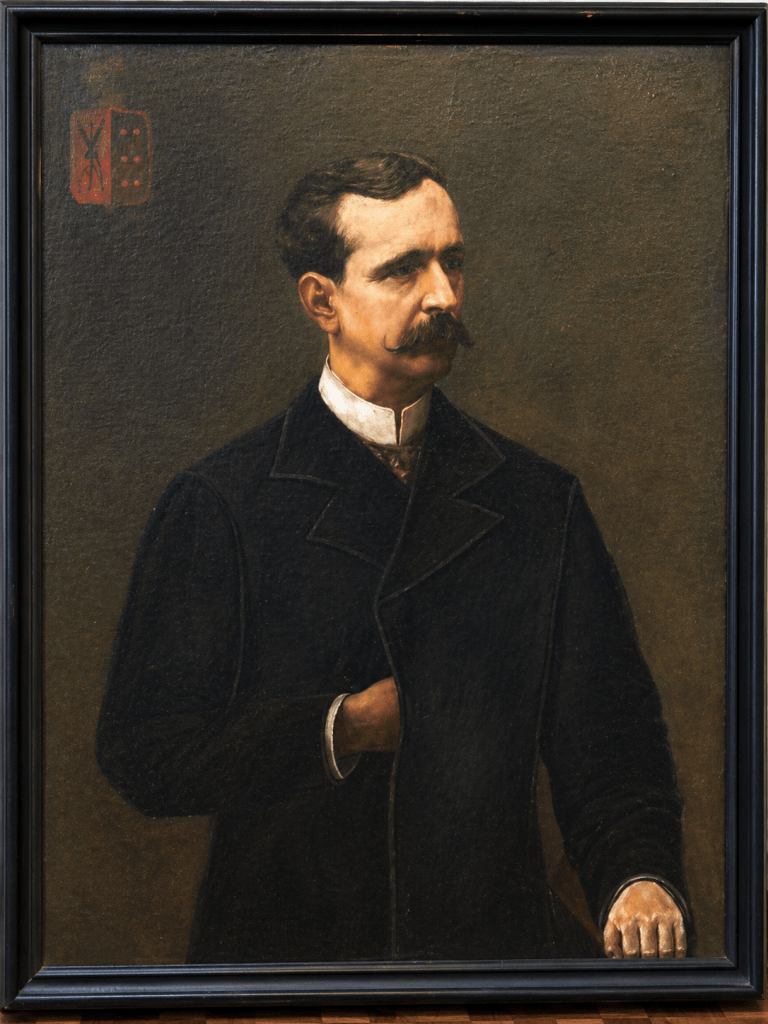
He began his legal career in Manila under his mentor Dr. J.M. Jugo, later working with Francisco Licaros, before establishing his own practice (Manuel 1955, 313). In 1861 he was appointed promotor fiscal of Manila and reappointed the following year; he then served as teniente fiscal at the Real Audiencia and later as Consejero de Administración, succeeding his brother Félix (Artigas 1996, 47).
Parallel to his legal work, he held academic posts at the University of Santo Tomas. He obtained the degree of doctor en jurisprudencia (c. 1865) and, after competitive examination, became catedrático de derecho patrio [a senior university professor or lecturer in Spanish or Spanish-colonial history who specializes in derecho patrio (national/native law)] in 1866, succeeding Francisco de Mercaida (Manuel 1955, 313). During his studies, he was contemporaneous with Fr. José Apolonio Burgos, then pursuing his doctorate in canon law, placing him within circles that fostered liberal and reformist thought (Schumacher 1981, 62–65). He later acted as legal counsel for Burgos.
He was active in civic institutions, serving on the boards of Obras Pías, Colegio de Santa Isabel, Real Hospicio de San José, and the Sociedad Económica de Amigos del País. I believe this is the reason why the Sociedad-supported Academia de Dibujo y Pintura [Academy of Painting and Drawing] during Juan Luna and Felix Hidalgo’s time was located in his house inside Intramuros. He was known for his rapport with students, many of whom—including Florentino Torres, Antonio Ma. Regidor, Mamerto Natividad, Felipe Buencamino Sr., and Hugo Ilagan—later emerged as reformist leaders (Artigas 1996, 50–52).
Politically, he headed the lay branch of the Comité de Reformadores, composed of lawyers and businessmen advocating administrative reforms under Governor-General Carlos María de la Torre, particularly in the context of the Spanish Revolution of 1868 (Artigas 1996, 52). This reformist climate ended with the appointment of the reactionary Governor-General Rafael Izquierdo.
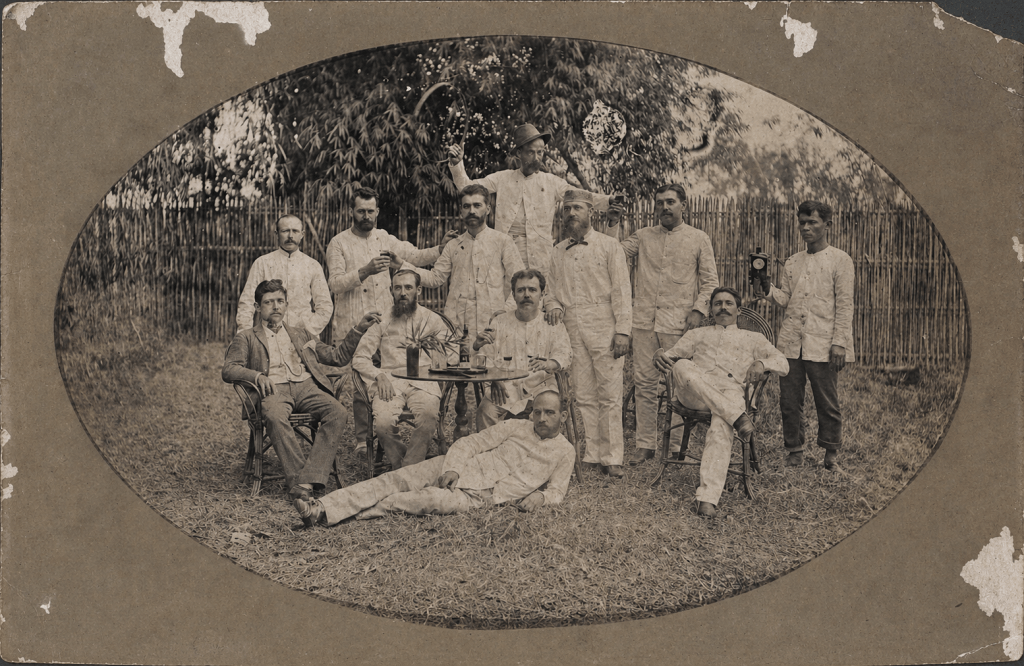
Following the Cavite Mutiny of 1872, Pardo de Tavera was arrested on 21 January 1872 and sentenced to six years’ exile in Guam (Marianas) (Artigas 1996, 58). His wife, Gertrudes Gorricho, joined him in exile. A royal pardon issued on 23 November 1874 curtailed his sentence (Manuel 1955, 314). Rather than return to the Philippines, he chose to remain abroad and relocated to Paris later that year.
He died in Paris on 19 March 1885, as confirmed by his tomb inscription, and was buried at the Cimetière du Père Lachaise. He had three children: Eloísa (married Daniel Earnshaw), Beatriz (married Manuel de Yriarte), and Joaquín, who later served as director of the National Bureau of Investigation (Manuel 1955, 314).
References
Artigas y Cuerva, Manuel. National Glories: The Events of 1872: A Historico-Bio-Bibliographical Account. Trans. O. D. Corpuz. Quezon City: University of the Philippines Press, 1996.
Manuel, E. Arsenio. Dictionary of Philippine Biography. Vol. 1. Quezon City: Filipiniana Publications, 1955.
Schumacher, John N. Revolutionary Clergy: The Filipino Clergy and the Nationalist Movement, 1850–1903. Quezon City: Ateneo de Manila University Press, 1981.
 Geronimo Cristobal