Category: Fiction
-
Poseidon’s poisoned gifts
On John Steinbeck’s The Pearl and the bizarre Pearl of Lao Tzu By the time John Steinbeck published The Pearl in 1947, his reputation as a chronicler of the dispossessed was well established. The Grapes of Wrath had cemented his place as a writer who could capture the harsh realities of those on the fringes…
-

Marriage (Mas Ruscitadewi, 1995)
Eave hanging (ider-ider) with scenes from the Baratayuda (Great Battle) from the Mahabharata, Ink and pigments on handwoven cotton cloth 18th-early 19th century, 39 3/8 × 276 3/4 inches (100 × 703 cm). Donated originally by Claire Holt and Ben Anderson and transferred from the Echols Collection at Cornell University’s Kroch Library. Photo: Collection of…
-
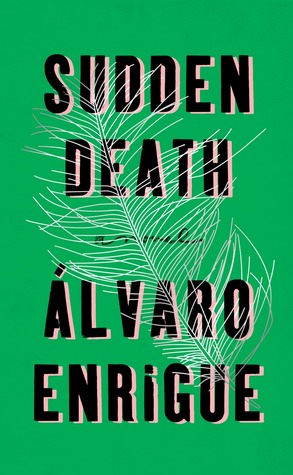
Sudden Death (Alvaro Enrigue, 2016)
A duel between Caravaggio and Quevedo, or how a tennis match connects worlds. Since when did people actually play tennis? And since when have tennis shoes been around, today the most socially acceptable and most widespread footwear worldwide? And how did you make the balls? The Mexican author Álvaro Enrigue, born 1969 in Guadalajara, México,…
-
The decollage we live in
It’s hard to explain, even to myself, why an artwork from more than fifty years ago can speak to our time without resorting to clichéd notions of the timelessness and universality of artistic language. I try to think of concrete experiences that can constitute a right mindset to write about Jacques Villegle, a Parisian artist…
-
Outlaws (Javier Cercas, 2014)
The fifty-eight-year-old Javier Cercas made his latest breakthrough outside of Spain with his novel “Anatomy of a Moment”, which the most important Spanish daily newspaper “El Pais” named Book of the Year in 2009. The well-known Argentinian author Albert Manguel had praised this novel, which revolves around the failed military coup in 1981. It received…
-
A romance in the provinces (Kornel Filipowicz, 2017)
I just read A romance of provinces (1960), by the Polish poet, novelist and screenwriter Kornel Filipowicz (1913-1990), who was for more than twenty years, and until his death, life partner (each one, in his house) by the poet Wislawa Szymborska (1923-2012), Nobel Prize for Literature in 1996. The affinity of worlds and tones is…
-
The Cave (Jose Saramago, 2000)
“Man never sees things themselves, but always only their shadows”, Plato once philosophized in his allegory of the cave. And before Saramago’s hero turns his back on the shadow on the wall of the cave and finds the exit from the cave, he must fear, doubt and hope for a long time – and the…
-
Throw Away Day
A new documentary on the life and work of abstract expressionism’s invisible man, Clyfford Still and the quest to reclaim one of his paintings in an auction at the Sotheby’s Contemporary Evening Sale A few minutes after four and the day slipped into darkness, signalling stagehands at the Sotheby’s Contemporary Art Evening Sale to finalize…
-
Viet Thanh Nguyen’s The Sympathizer (2015)
Viet Thanh Nguyen’s novel begins The Sympathizer with a riddle “I am a spy, a sleeper, a spook, a man with two faces”. What is he? Might we ask. The line was spoken by a double agent working for the North Vietnamese Communists as well as for the United States during and shortly after the…
-
Tales for winter nights
Reading some of Olga Tokarczuk greatest hits Polish author Olga Tokarczuk once compared her books to music videos. This analogy applies both to her collection of short stories and novels: They are self-contained, and the narratives are dense and short, so there is not even a moment of digression. The narratives vividly construct imaginative vignettes of ordinary…
-
Elena Ferrante’s Naples Tetralogy
From the chaos of history (n) and of life, literature extracts its own world – a formed, an ordered world? And what does this world have to do with that life? An old question that has always been answered, weighted and interpreted again and again. In Elena Ferrante’s “saga” about the narrator Elena Greco, who…
-
The Buru Quartet (Pramoedya Ananta Toer 1980-1988)
The Buru Quartet refers to the the volumes Bumi Manusia (“This Earth of Mankind”, 1980) , Anak Semua Bangsa (“Child of All Nations”, 1980), Jejak Langkah (“Footsteps”, 1985) and Rumah Kaca (“Glass House “, 1988). The books were banned by the regime of long time Indonesian president Suharto and his successor B.J. Habibie. The ban…
-
Literate Gangsters
“BY NIGHT IN CHILE” is another novel discovery by the great Chilean author Roberto Bolaño A mediocre Chilean poet, far more famous as a literary critic and priest, is dying. All his life he had been alone, Sebastián Urrutia Lacroix writes. He then proceeds to a monolithic paragraph of his laborious justification, in which it…
-
Beauty is a wound (Eka Kurniawan, 2015)
Hi style is reminiscent of Gabriel Garcia Marquéz and William Faulkner, says the New York Times Book Review. “Beauty is a Wound” by Eka Kurniawan is a wild and rousing nightmare about Indonesia’s recent history. Eka Kurniawan, born 1975 in West Java, is not only novelist, screenwriter and blogger, but also comic artist. And you…
-
The Kingdom of this World (Alejo Carpentier, 2007)
The Cuban novelist Alejo Carpentier (1904-1980) tells of the slave revolts in the Antilles during the French Revolution. Led by Macandal, a black man who can take the form of various animals, the slaves, headed by the bird-man Ti Noel, fight for their freedom; they pit their their belief on miracles and magic against the…
-
Culture of Death in Yukio Mishima’s Novels
Portrait of a Japanese eccentric and poet and suicide victim, Yukio Mishima In the morning of November 25, 1970, dressed in a theatrical fantasy uniform and accompanied by four cadets of his theatrical fantasy private army, he captured the Commander of Japanese Civil Defense. He ordered that the soldiers of the 32nd Regiment should sit in…
-
Ilaw Sa Hilaga (Lazaro Francisco, 1980)
The novel, Ilaw sa Hilaga (Northern Lights) was originally published as “Bayang Nagpatiwakal” in 1931. It depicts the 1920s, during the American colonial period in the Philippines. By this time, the war for independence which started in 1896 had already subsided and the colony had entered into a delicate period of peace time. There is…
-
Piercing (Ryu Murakami, 2009)
A novel about the interactions of sex that is powerfully repulsive and captivating at the same time In Japan and the English-speaking world, Ryu Murakami first became known with his novel “Coin Locker Babies” (1980). In it he describes the life of two boys who were exposed in locker rooms in infancy and grew up…
-
No more love (Javier Marias, 2016)
“The older I get, the less certainty I have,” said Spanish writer Javier Marías in a recent interview. Almost exactly twenty years ago, after the publication of the translation of his novel My Heart So White, he had been discovered by more English-speaking countries. More than six million copies of his novels, stories and essays translated into 34…
-
The Enchantress of Florence (Salman Rushdie, 2008)
The female figure in the cover of Salman Rushdie’s eighth novel, the “Enchantress of Florence” hints on the action that will unfold in the text. But before any of the action occurs, Rushdie loses himself in meandering narrative streams and meticulous details. The story begins at the end of the fifteenth century where we meet…
 Geronimo Cristobal