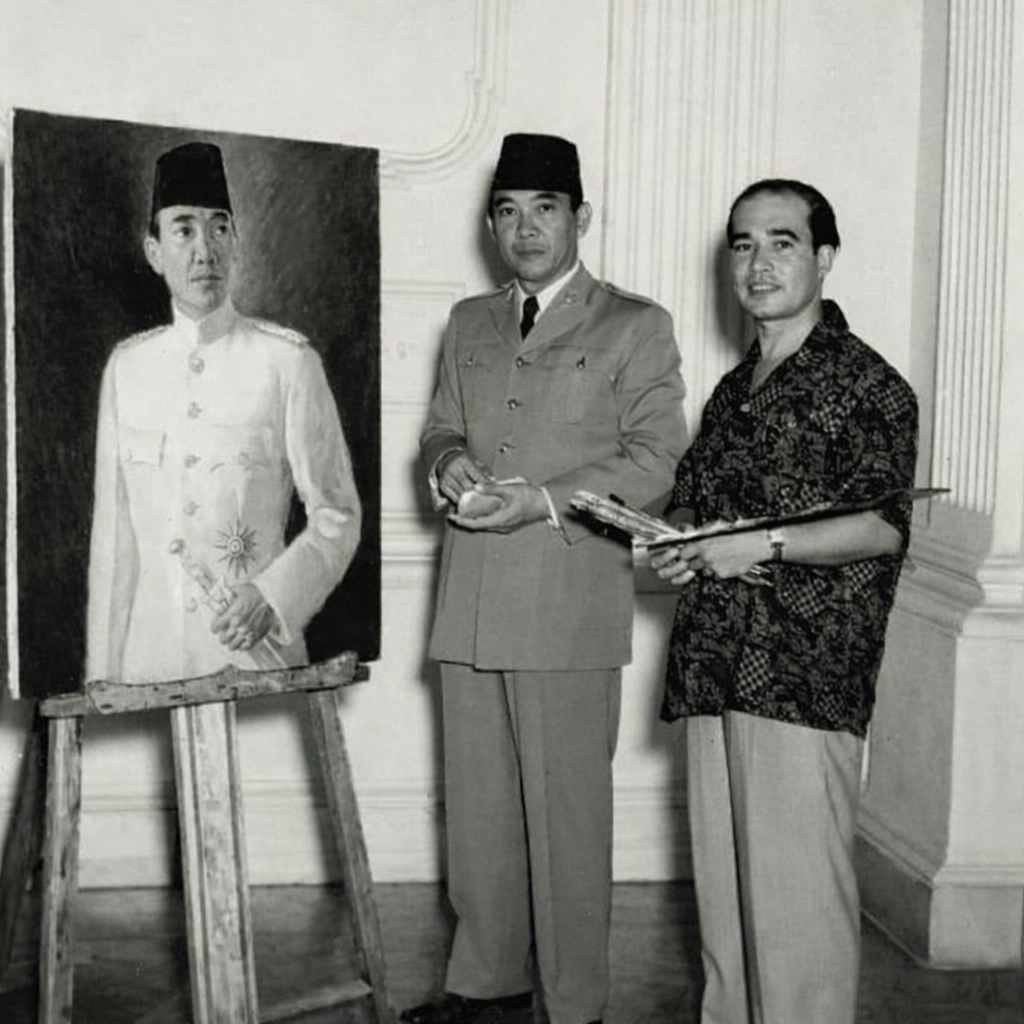
Filipino painter Antonio Garcia Llamas showing his painting of Fatmawati and President Sukarno at the palace, 19 July 1951. Source: ANRI, KEMPEN RI Jakarta 1951 No. 2900. 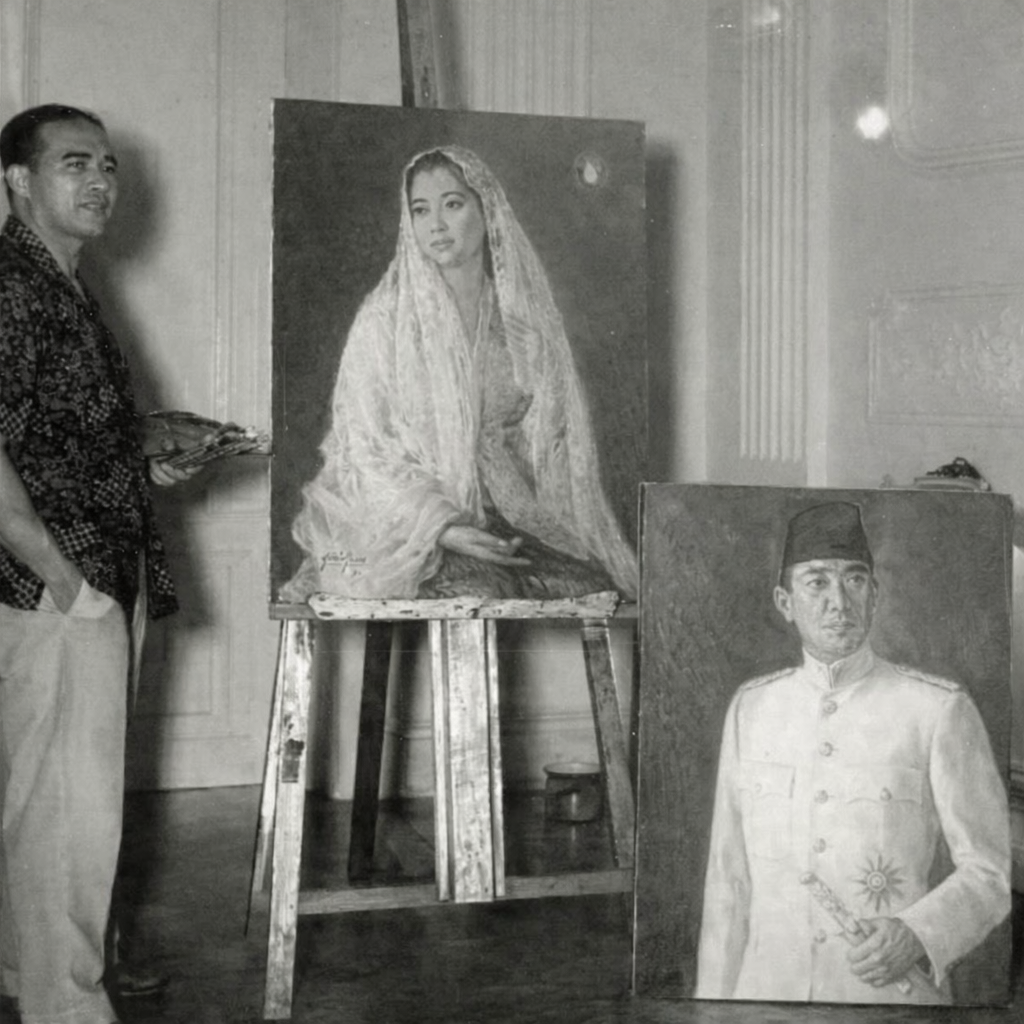
Filipino painter Antonio Garcia Llamas showing his painting of Fatmawati and President Sukarno at the palace, 19 July 1951. Source: ANRI, KEMPEN RI Jakarta 1951 No. 2900.
Antonio Garcia y Llamas (1912–1999) was a Filipino painter, muralist, and teacher who worked between Manila, Jakarta, and Madrid. Little is written about Garcia but his work aligns with the Philippine academic tradition in twentieth-century Philippine painting. He was born in Manila on 16 May 1912 and received his early education at the Colegio de San Juan de Letran. His father, Antonio Garcia Granda, was a well-known engraver and professor of engraving at the University of the Philippines (UP) School of Fine Arts.His artistic formation was closely tied to the institutional development of academic art training in the Philippines during the American colonial period (Pilar 1994/2018).
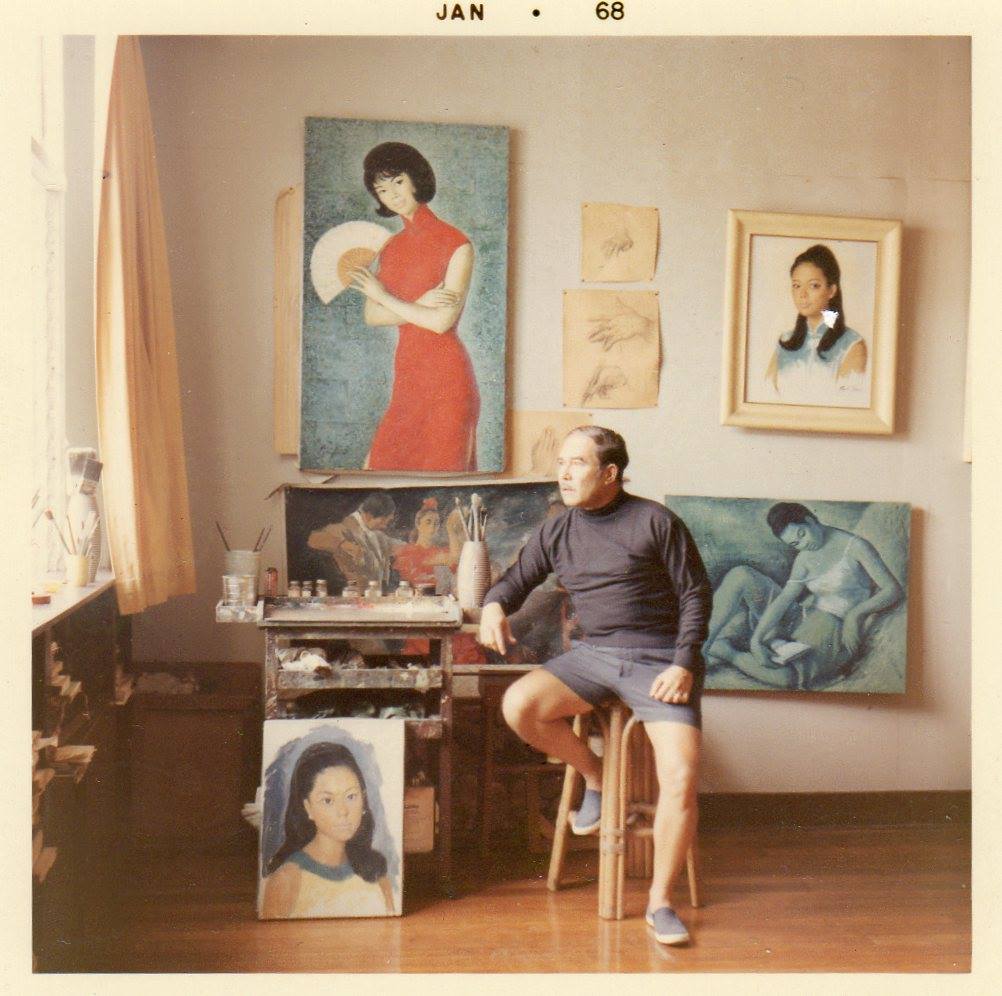
Garcia began his formal training in painting at the UP School of Fine Arts in 1926. At the time, the school was the principal center of academic art instruction in the country, and its curriculum continued the nineteenth-century emphasis on figurative draftsmanship, historical subjects, and portraiture. Garcia’s early achievements include winning first prize in the open poster competition for the Thirty-Third International Eucharistic Congress held in Manila in 1937, a major Catholic event that attracted international attention and provided Filipino artists an opportunity to demonstrate their abilities in religious imagery and graphic design (Pilar 1994/2018).
In 1938 Garcia left the Philippines to continue his artistic studies in Europe. He enrolled at the Regia Accademia di Belle Arti in Rome and later became a scholar at the Real Academia de Bellas Artes de San Fernando in Madrid. There he studied under the academic painters Eduardo Chicharro and Manuel Benedito y Vázquez-Díaz, whose instruction reinforced Garcia’s commitment to figurative realism and classical composition. This training placed him within the conservative school of painting, a current that remained influential in Philippine art even as modernist movements gained prominence in Manila (Pilar 1994/2018; Villegas 2012).
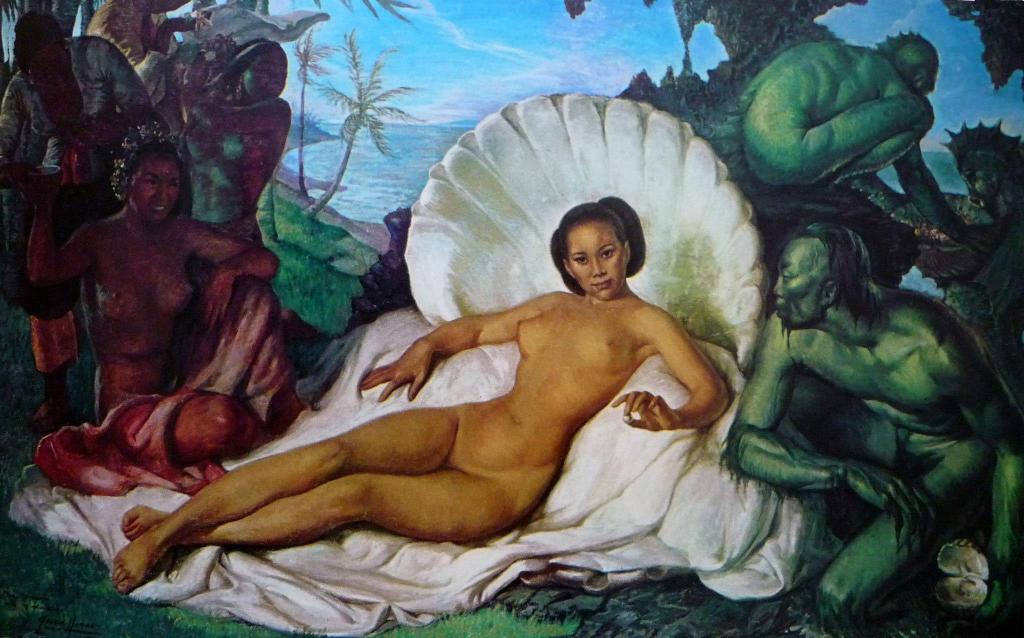
Garcia quickly gained recognition in Spain. In 1941 his painting Indays (Women from the Malay Indah meaning beautiful) attracted considerable attention during his solo exhibition at the Círculo de Bellas Artes in Madrid. The work, depicting three nude women with emphasized Malay features, led critics to characterize him as a “Filipino Gauguin,” reflecting European fascination with tropical subjects and the representation of Southeast Asian bodies in academic painting. The painting circulated widely and was reproduced in Shin Seiki, a cultural magazine published in the Philippines during the Japanese occupation (Pilar 1994/2018).
He continued to exhibit in Spain during the 1940s. In 1945 Garcia presented several works, including a portrait of General Borbón, at the National Exposition of Fine Arts in Madrid. His growing reputation within Spanish artistic circles was marked by the awarding of the Alfonso X el Sabio medal by Generalísimo Francisco Franco in 1942, recognition granted to artists whose work contributed to the prestige of Spanish cultural institutions (Pilar 1994/2018).
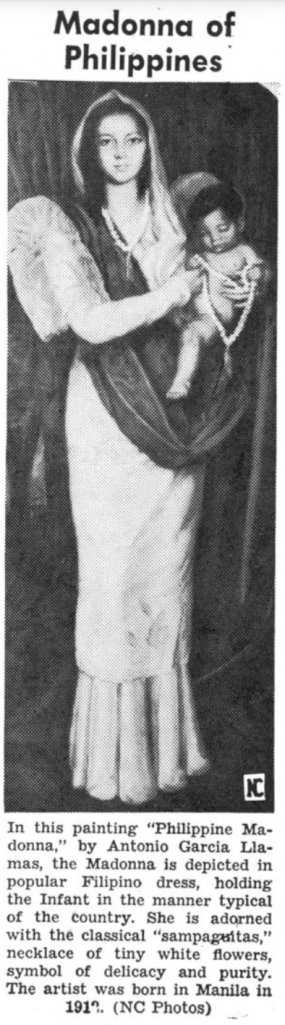
Garcia’s paintings often combined academic realism with themes drawn from Philippine culture. One of his most notable works, Madonna Filipina (1950), presents the Virgin Mary dressed in a patadyong, the striped or checkered skirt associated with Visayan attire. The painting reflects a broader effort among Filipino artists in the mid-twentieth century to indigenize Christian iconography by integrating local dress and physiognomy into traditional religious imagery (Pilar 1994/2018).
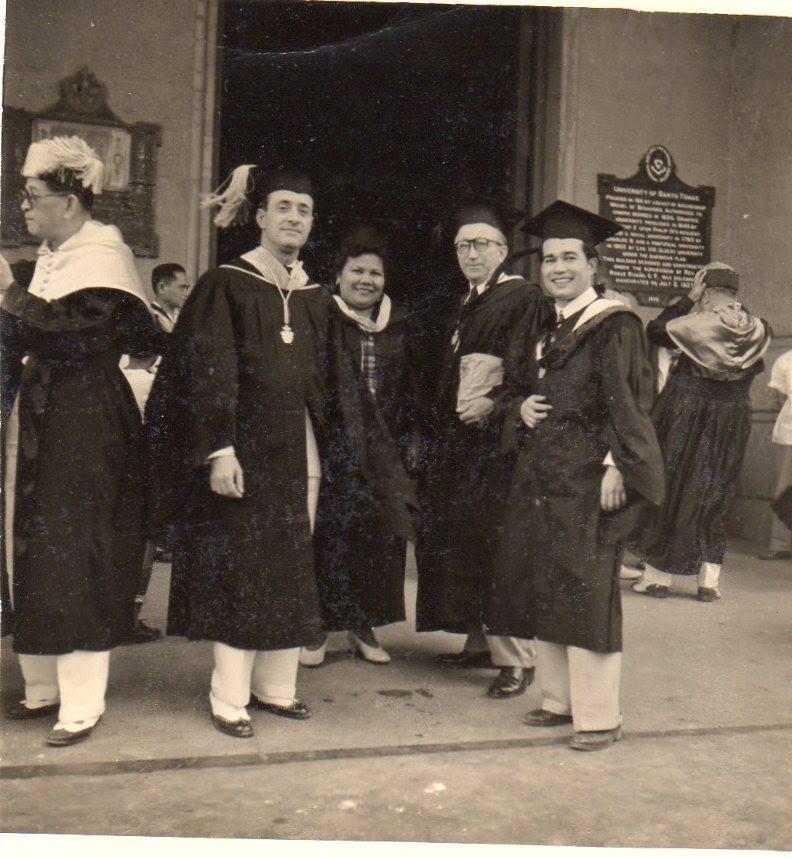
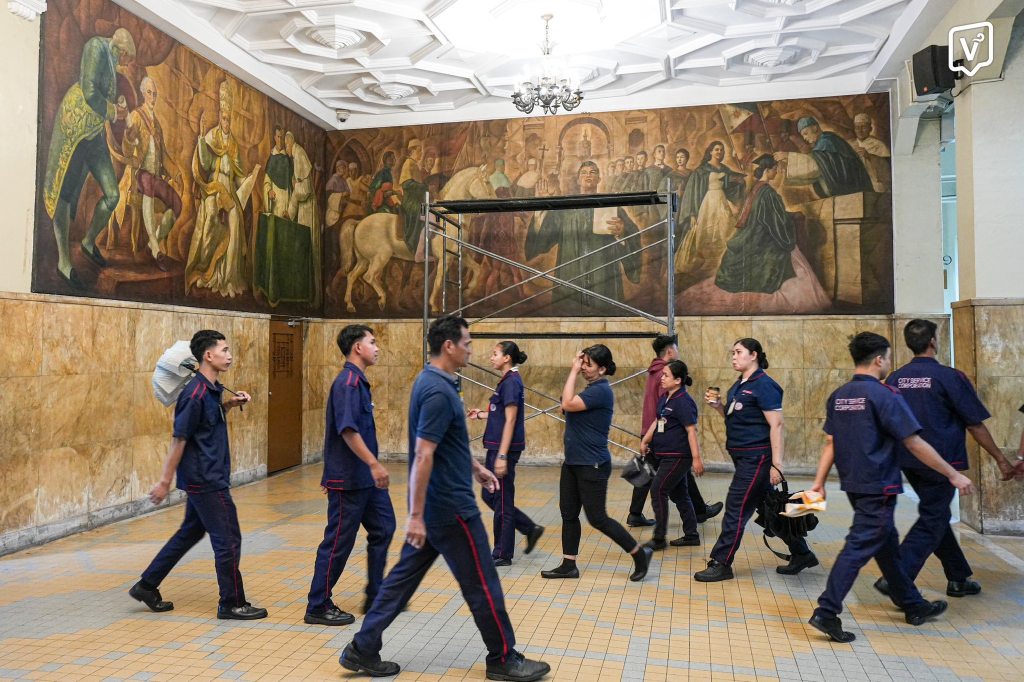
Alongside his activity as a painter, Garcia taught art for many years as a professor of painting at the University of Santo Tomas (UST) in Manila, where he contributed to the training of younger artists, architects, and fashion designers. He also painted the mural The History of the University of Santo Tomas during this period (1952–1954). The mural is a four-panel cycle installed in the lobby of the UST Main Building in Manila. Conceived as a chronological narrative, the mural depicts key moments in the institution’s history, beginning with the bequest of Archbishop Miguel de Benavides, O.P., in 1605 that enabled the founding of the university in 1611, and the elevation of the institution to university status by Pope Innocent X in 1645. Later panels portray subsequent milestones, including the declaration of UST as a Pontifical University by Pope Leo XIII in 1902 and the graduation of male and female students under the co-educational system. Painted between 1952 and 1954, the mural remains one of the most prominent examples of mid-twentieth-century institutional mural painting in the Philippines.
His career later became increasingly centered in Europe, where he continued to exhibit and produce religious works. In May 1979 he presented an exhibition during Semana Filipina at the Sala de Exposiciones del Centro Iberoamericano de Cooperación in Madrid, showing a range of realist, abstract, and allegorical works (Pilar 1994/2018; León Gallery 2021).
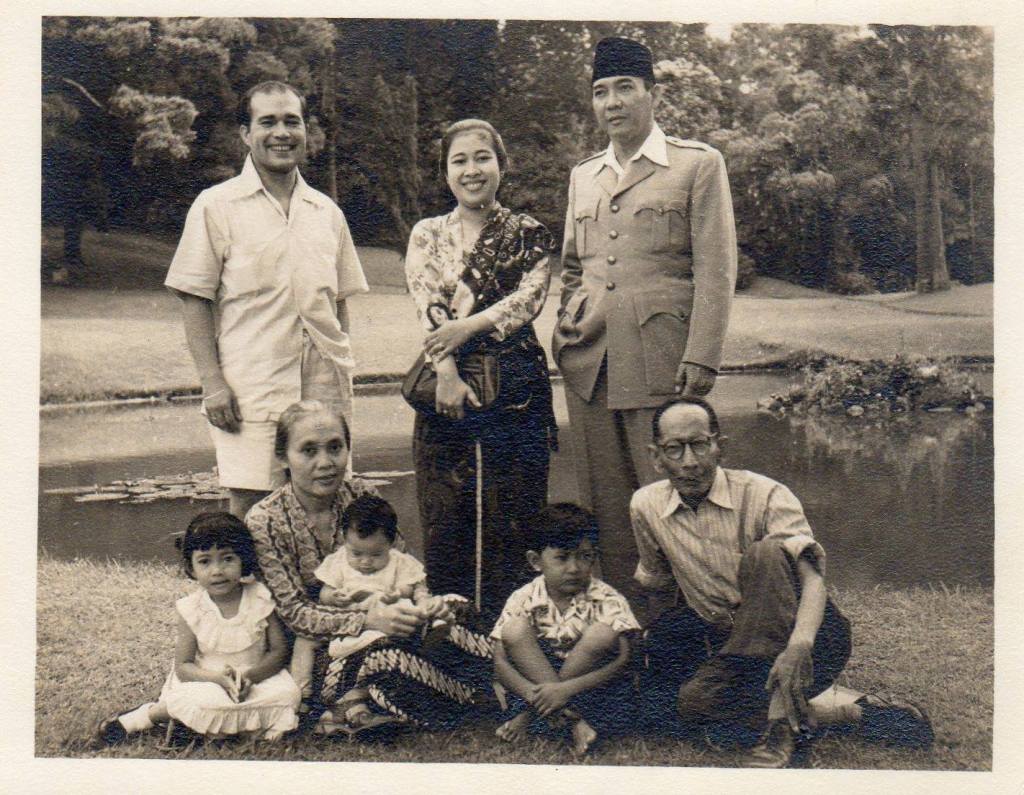
During the early postwar period Garcia also developed a connection with Indonesian president Sukarno, a prominent patron of artists and collectors of modern painting in Southeast Asia. Photographs preserved in the Arsip Nasional Republik Indonesia document Garcia with Sukarno in Jakarta in July 1951 beside portraits he painted of the president and of Fatmawati, Sukarno’s wife. These works formed part of the broader diplomatic and cultural exchanges that linked newly independent Southeast Asian states during the mid-twentieth century. Sukarno’s interest in Garcia’s work reflects the president’s well-known engagement with artists across the region and his patronage of painters whose works helped visualize national leadership and postcolonial identity (ANRI 1951; Pilar 1994/2018).
Among his final major projects was the mural of the Virgin Mary titled Mia Madonna at the church Mia Madonna e Mia Salvessa in Casapenna, Caserta, Italy. The work was blessed by Pope John Paul II on 13 November 1990, marking a significant culmination of his engagement with religious painting and ecclesiastical commissions (Pilar 1994/2018). Garcia died in Madrid on 30 November 1999.
Within the broader history of Philippine art, Antonio Garcia Llamas represents a generation of painters who maintained the academic tradition while operating within transnational artistic networks linking Manila and Europe. His career illustrates the persistence of portraiture, religious imagery, and figurative realism in twentieth-century Philippine art, even as modernist movements transformed the artistic landscape of Manila (Pilar 1994/2018; Villegas 2012; León Gallery 2021).
Bibliography
Arsip Nasional Republik Indonesia, ANRI KEMPEN RI Jakarta 1951 No. 2900.
León Gallery. 2021. Magnificent September Auction Catalogue. Makati: León Gallery.
Pilar, Santiago A. 1994. “Garcia, Antonio.” Updated by Roberto Daniel Devela, 2018. Encyclopedia of Philippine Art Digital Edition. Cultural Center of the Philippines. Published 18 November 2020. Accessed 8 March 2026. https://epa.culturalcenter.gov.ph/3/17/3559/.
Villegas, Roberto S., Jr. 2012. Visual Art Collection Catalogue. Manila: University of Santo Tomas Museum.
 Geronimo Cristobal