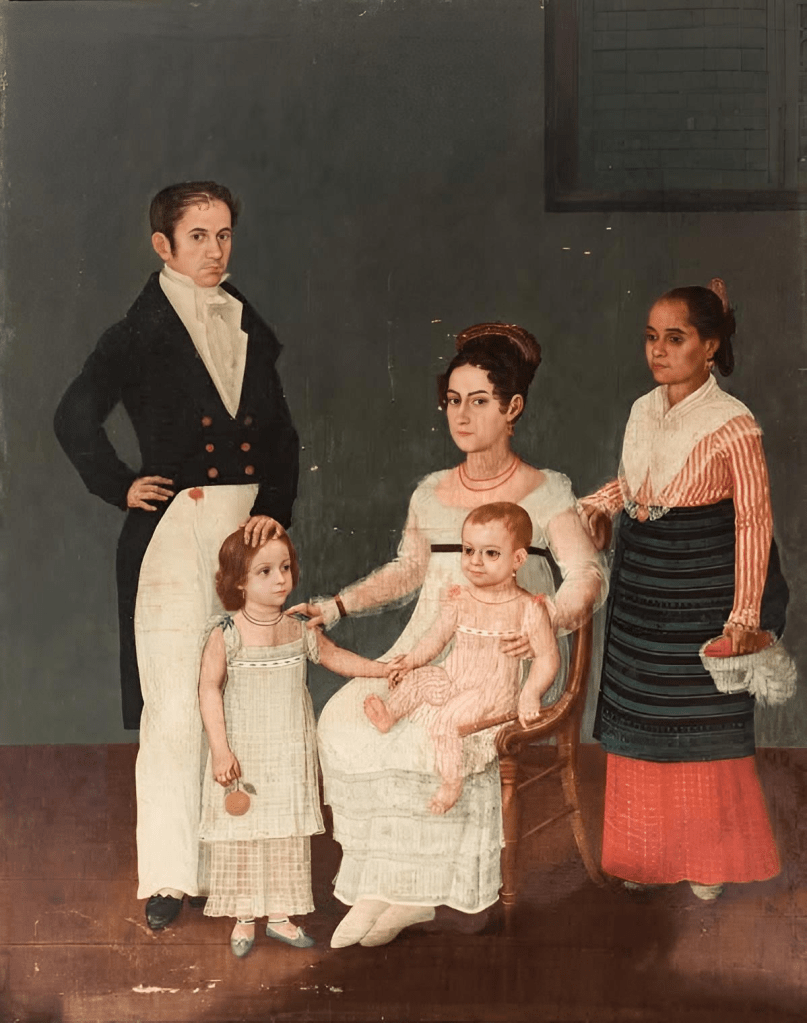
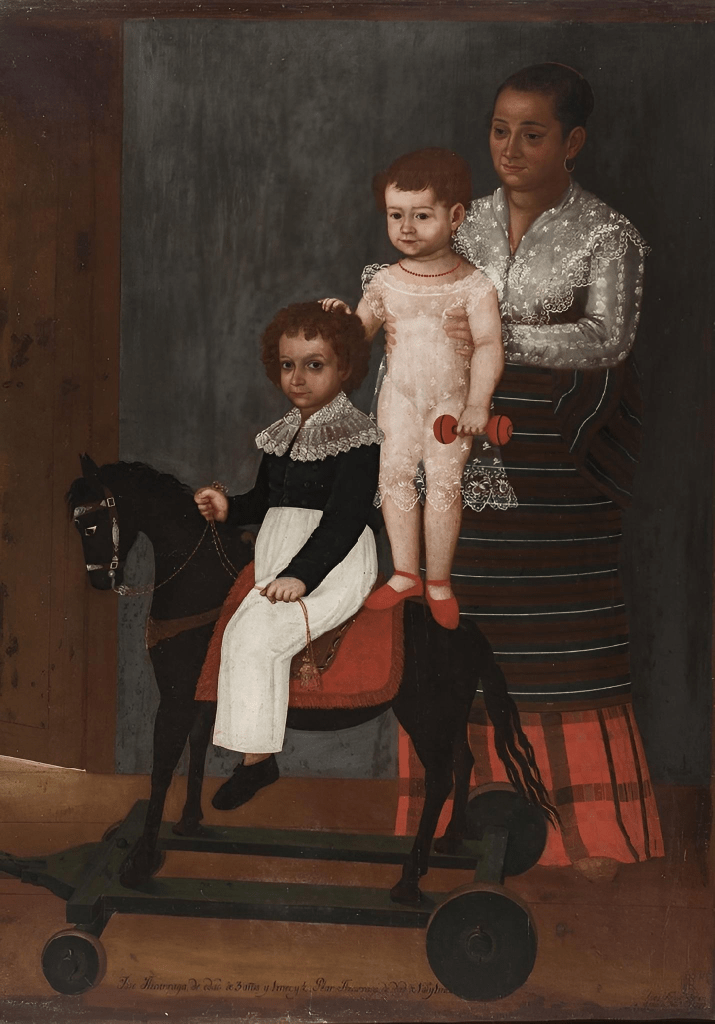
Retrato de la familia Azcárraga (c.1827–1830) by Juan Arzeo consists of two oil-on-canvas portraits depicting members of the Azcárraga family of Manila. The sitters are José Azcárraga y Ugarte, an Escolta bookseller; his wife María Isidra Palmera y Bersoza, described in period sources as a mestiza de Albay; and their children José Jr. and Pilar. The Azcárragas were a Basque-descended family active in Manila’s mercantile class. Their son Marcelo Azcárraga (born 1832, Binondo, not depicted in the paintings) became the only Prime Minister of Spain of Filipino birth.
The paintings are signed “Juan Arzeo, Manila”, confirming their local execution. An inscription on one reads:
“José Azcarraga de edad 3 años y 1 mez y Pilar Azcarraga de edad de 1 año y 1 mez… Juan Arzeo… 1827.”
(“José Azcárraga aged three years and one month and Pilar Azcárraga aged one year and one month… Juan Arzeo… 1827.”)
The pair depict two stages in the family’s life. The first portrait (traditionally dated 1824 but more likely c.1827) shows José Azcárraga and María Isidra with their daughters and a Filipina niñera (nanny) inside a domestic interior furnished with what I think are capiz-paneled windows, imported furniture, and reference to tropical fruit, elements associated with upper-class Manila homes. The second (dated c.1830) portrays José Jr. on a rocking horse, while the same but older-looking niñera, holds the infant Pilar. Comparison of the children’s ages suggests that early catalogues may have reversed the dating sequence: the portrait with Pilar as a toddler should follow the one with her as an infant.
The niñera appears in both works wearing the attire of an India Elegante (refer to the Balagtas play) a Manila urban type of the period. She is dressed in a tapiz (overskirt), saya (skirt), and pañuelo (shawl) edged with lace, along with gold earrings and a peineta (comb). Her garments likely used piña or jusi fabrics. Unlike similar colonial portraits in which servants are relegated to the background, she stands beside the family, clearly visible and composed.
Juan Arzeo (Manila, c.1795–c.1865) was active in the first half of the nineteenth century and was a contemporary of Damián Domingo. He painted religious and secular subjects. Known works include portraits of Archbishop Juan Antonio Zulaybar (1820) and Manuel Blanco, author of Flora de Filipinas. A portrait of a young Queen Isabella II is also attributed to him. Arzeo may have been related to Antonio Malantic, another Manila painter, whose mother’s surname was Arzeo.
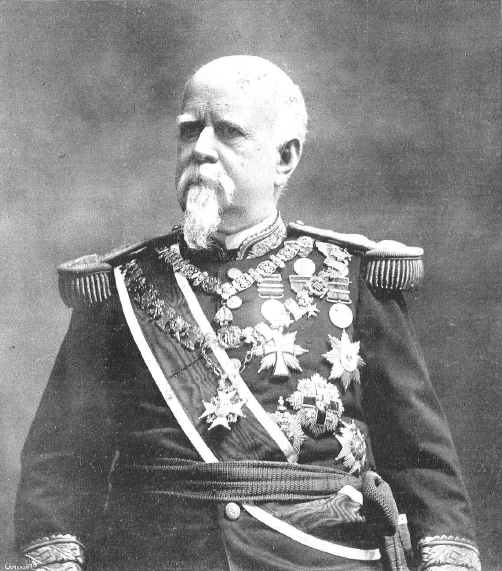
Pilar Azcárraga, the child depicted in the portraits, later married Felipe Govantes, and their son Pedro Govantes became Count of Albay. Marcelo Azcárraga, born after the portraits were painted, rose to prominence in Spain as Minister of War and eventually Prime Minister (1897–1899).
The paintings were likely taken to Spain by the family or their descendants. They were documented in the early 2010s by Spanish art critic Daniel Díaz, who described them as rare examples of Filipino portraiture of the early nineteenth century. Surviving photographs show minor degradation of surface color and craquelure. Based on visible internal evidence, the relative ages of the children and compositional differences, the more accurate dating is estimated at c.1827 and c.1830 rather than 1824 and 1827 as previously listed.

I have never seen these paintings in person but I know they are in Manila and I have reached out to known experts who may offer leads to their location in a private collection. I can offer more information based on my ongoing research about paintings from this period.
 Geronimo Cristobal