Category: Sculpture
-
From the Archive: EL 82
Originally published in Excelsior, Ano XXIX (Numero 928), Febrero 29, 1932 Five decades ago, on the first day of March of that year so sorrowfully remembered in the history of the capital—because during its course it was first visited by the terrible traveler from the Ganges, which spread death and the most dreadful devastation among…
-
Dying Gaul in Philippine Cinema and Plaster Casts Conference at Aby Warburg
The image above is a film still from Babaing Hampas-Lupa (1952), an LVN Pictures melodrama written and directed by Nemesio E. Caravana and photographed by Raymond Lacap. The image shows Nida Blanca and Rogelio de la Rosa standing beside a plaster cast of the Dying Gaul inside the galleries of the University of the Philippines…
-
Félix Pardo de Tavera y Gorricho (Manila, 1859 – Paris, 1932)
While looking into possible Filipino connections in the circle of Auguste Rodin, I began tracing the life and career of Félix Pardo de Tavera y Gorricho (Manila, 1859 – Paris, 1932). Because he belonged to a family of exceptionally accomplished ilustrados—the educated elite of nineteenth-century Manila—he is sometimes mistaken for one of his more famous…
-
Women Pioneers of Philippine Art
In celebration of International Women’s Day, allow me to introduce three pioneering and remarkable women in Philippine Art. By the late 19th century, women began carving their place in formal art education led by the trailblazing Pelagia Mendoza y Gotianquin (1867-1939). Born in Pateros, Mendoza grew up demonstrating exceptional talent in artistic pursuits such as…
-
Talismanic Case with Qurʾanic Prayer Scroll (Iran, 19th Century)
This nineteenth-century Iranian amulet consists of a metal case and a tightly rolled Qurʾānic prayer scroll preserved inside it (National Museum of Asian Art, Accession S2018.6a–c). The container, made of silver plated over a copper alloy, measures approximately 1.9 × 7.6 × 1.5 cm and has a six-sided body with rounded ends. One end opens…
-
Bonifacio’s Talisman
Andrés Bonifacio (1863–1897) was a Filipino revolutionary leader and founder of the Katipunan, the secret society that launched the 1896 uprising against Spanish colonial rule. Often called the “Father of the Philippine Revolution,” Bonifacio emerged from modest urban circumstances in Tondo, Manila, and rose to prominence through his ability to mobilise working-class supporters. Unlike later…
-
The Chapel in the Six Circuits of Hell
In his Kapilya installation for Art Fair Philippines, Max Balatbat assembles a makeshift chapel of salvaged wood and rusted rebar. This is supposed to represent the look of faith forged from marginal lives that the art writer Carla Gamalinda has compared to the one studied by Rey Ileto’s Pasyon at Revolution. A pendulum whip swings…
-
The afterlives of Rizal’s A orillas del Pasig
A orillas del Pasig circulated in late nineteenth-century Manila as music sung in drawing rooms and printed as sheet music. Its most familiar version, A orillas del Pasig: Danza Filipina para Canto y Piano, features lyrics credited to José Rizal and music composed by his Ateneo Municipal classmate Blas Echegoyen. Hardly anyone remembers that the…
-
José Rizal’s Drawings of Anting-Anting
Proving yet again that in any field of inquiry Rizal emerges as the ubiquitous scholar, this photograph from the Dean C. Worcester Collection at the Newberry Library (Ayer Philippine Photographs) shows a drawing of objects he reportedly discovered on a hill near Dapitan. The inscription reads: “Anillo de oro con un rubí y una medallita,…
-
Amulets of historical imagination
In 2021 after numerous museum visits in Southeast Asia, I began reflecting on what collections revealed and concealed about history. The objects that most profoundly shifted my thinking were not the canonical works of art but the agimat, talismans seized under colonial regimes and now dispersed across museums. Just last week (September 21, 2025), while…
-
Manila’s Monument to Queen Isabel II
The statue of Queen Isabel II is one of few public artworks that survive from the time of Spanish colonial rule in the Philippines. Located in front of Puerta Isabel II in Intramuros, Manila, this bronze monument has weathered the vicissitudes of Philippine history and the shifting tides of politics and empire. Commissioned in the…
-
Juan Adán Morlán (1741–1816)
Juan Adán Morlán (1741–1816) is one of the defining sculptors of Spanish Neoclassicism, a figure whose artistic achievements were often intertwined with personal controversies and professional disputes. Born in Tarazona, Aragón, and baptized on March 1, 1741, Adán’s early life was rooted in a family of carpenters. His father’s craft provided the young Adán with…
-
Machete of Paete and other Petrified Idols of Underdevelopment
Machete Poster and sculpture by Paloy Cagayat. Photo: Lakan Sining. The town of Paete, Laguna in the Philippines is an artisanal community famous for its living tradition of wood carving of religious santos. In 1580, the town came under the administration of Spanish friars Juan de Plasencia and Diego de Oropesa, who encountered a native…
-
Rama Hari
In November 2017, the Times of India published a story about Prime Minister Narendra Modi applauding a ballet performance based on the Ramayana during the opening of the ASEAN Summit in Manila. According to Modi, the event which was attended by Donald Trump, Shinzo Abe, Joko Widodo, and Rodrigo Duterte among many others, shows India…
-
Mystery Object
This brass cylinder is made distinctive by the incisions of figures that resemble reliefs from temples or medieval goblets. Roughly a meter high, the object is shaped like a lighthouse, with a conical head that detaches from the neck. The shape of a lotus bud is inscribed at the tip of this head which can…
-

Protected: Biombo del Gobernador / Governor’s Screen Divider
There is no excerpt because this is a protected post.
-
David Medalla (1938-2020)
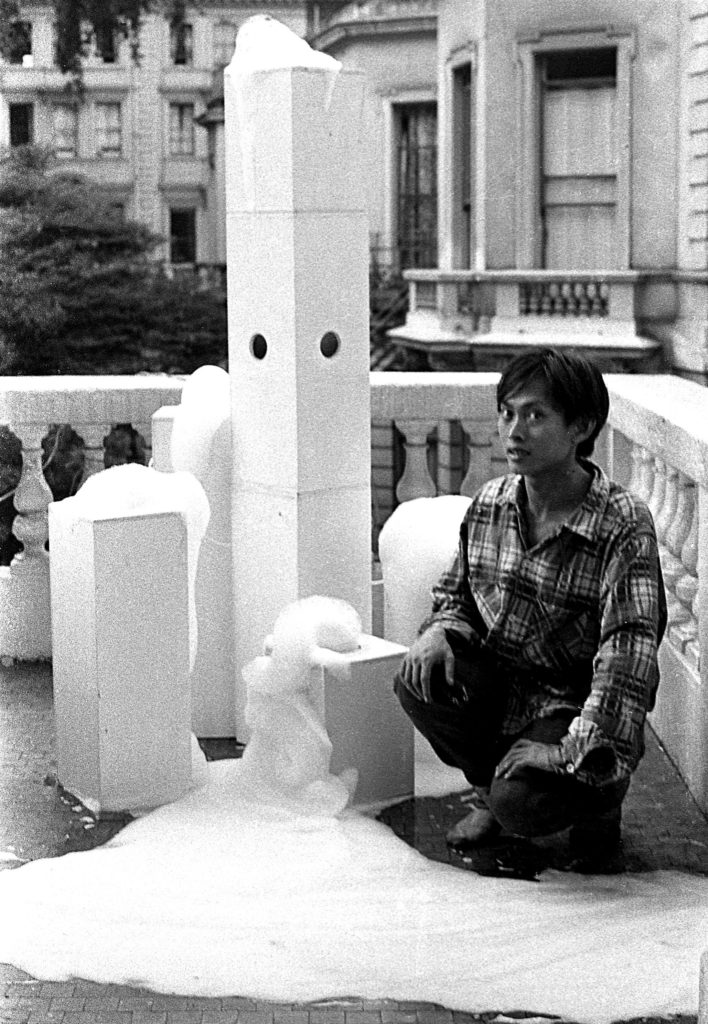
Peripatetic Filipino artist David Medalla, a pioneer of kinetic sculpture and participatory art performance, died in Manila on Monday, December 28. He was 82. He developed an early reputation as a poet and wünderkind during the immediate post-war period, and was recommended by American poet Mark van Doren to study Literature at Columbia University in…
-
The Furnace of Kings
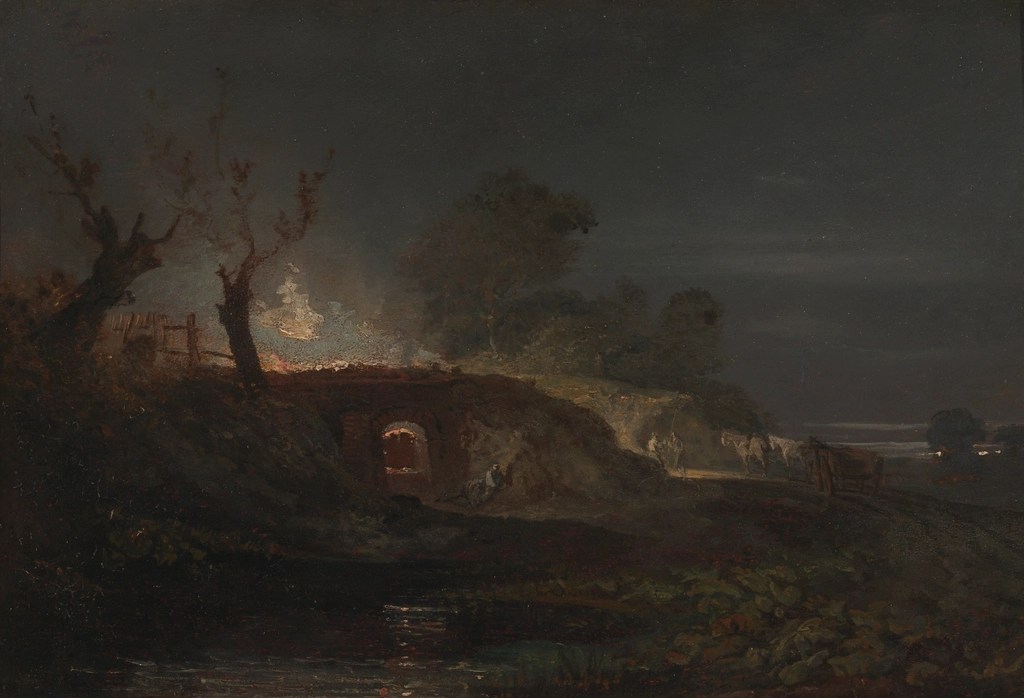
Carlos IV monument in Plaza Mayor, Intramuros c. 1898. Photo: John Tewell Collection. The statue of Carlos IV is one of few colonial era monuments that stand today in the old city of Manila called Intramuros. The original purpose of its commission, who made it, and the story of its construction have been largely forgotten,…
-
A decent photo of Montauk Point
Over the summer break, I visited Montauk Point on the easternmost end of Long Island and I was intrigued by the information written on a tourist pamphlet that lighthouses were the very first public works project undertaken by the United States. The lighthouse along with the one at Camp Henry, as pointed out in “Conjuring…
-
Brief notes on Teddy Roosevelt’s statue being removed from the steps of the Museum of Natural History
In the New York Times today: the equestrian statue of Theodore Roosevelt, the former president of the United States who declared the end of the Philippine-American War in 1902, will be removed from the steps of the Museum of Natural History. The Museum maintains that it is removing the statue not because of Theodore Roosevelt’s…
 Geronimo Cristobal