José Rizal titles the 26th chapter of his second novel El Filibusterismo “Pasquinades.” The term refers to anonymous satirical writings, insults, accusations, or political commentaries publicly posted in urban spaces. In the novel, rumours and inflammatory texts circulate through Manila following fears of student unrest and revolution. The people became anxious as the city is saturated with anonymous speech through walls, posters, gossip, and handwritten texts.
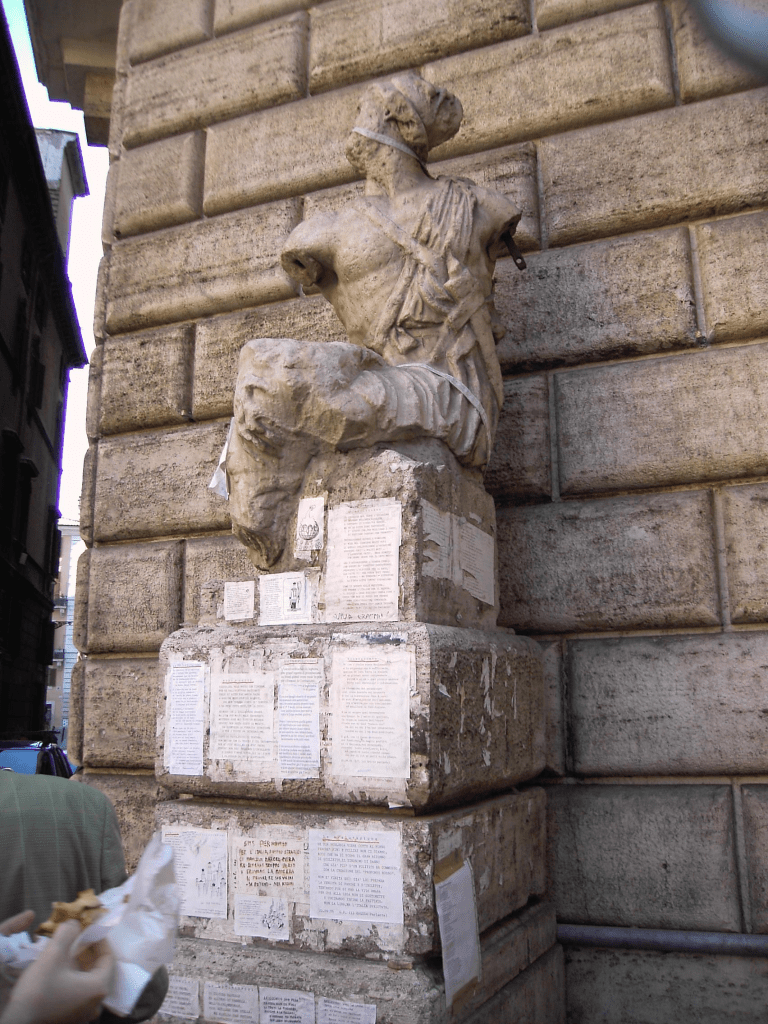
Rizal borrowed the term from an older European tradition. The word “pasquinade” derives from Pasquino, one of the so-called talking statues of Rome. Beginning in the sixteenth century, Romans attached satirical verses and political criticisms to ancient public sculptures in what became known as the Congregation of Wits. These statues became civic mouthpieces. They did not literally speak; rather, the public spoke through them. Texts criticizing popes, aristocrats, and state officials accumulated on monuments throughout the city.
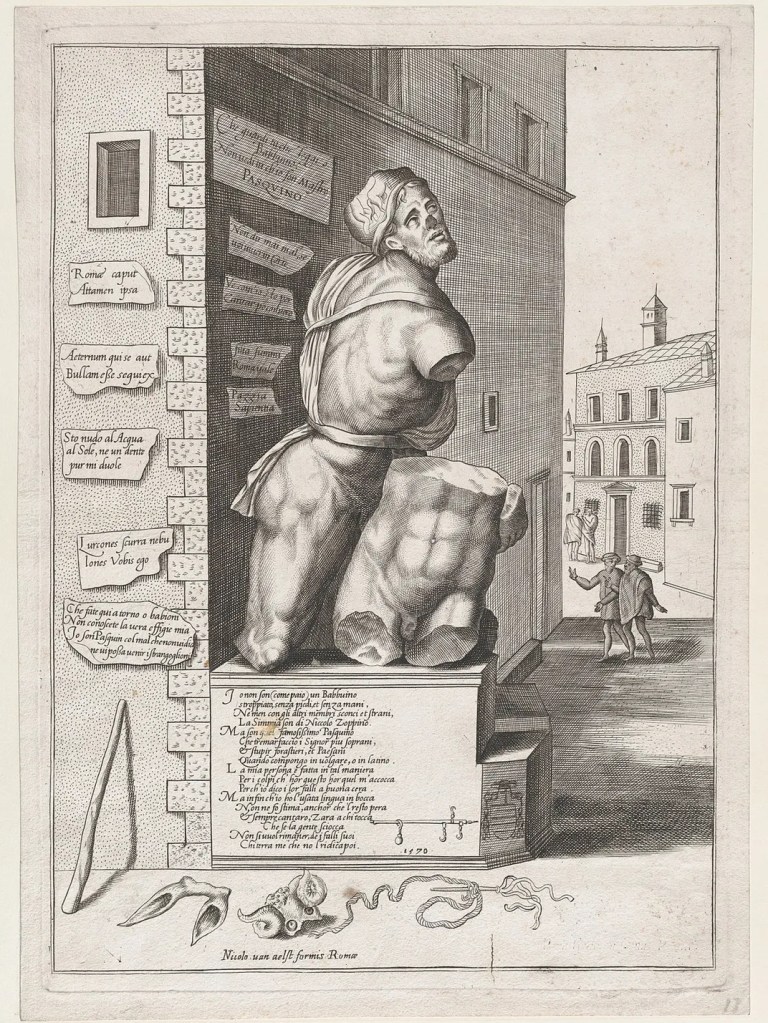
The Filipino word paskil, referring to pasted notices, political posters, or public announcements, preserves something of this same logic. Public surfaces become sites of commentary and dissent. Walls, statues, and monuments acquire political speech through the people who write on them, damage them, reinterpret them, or gather around them.
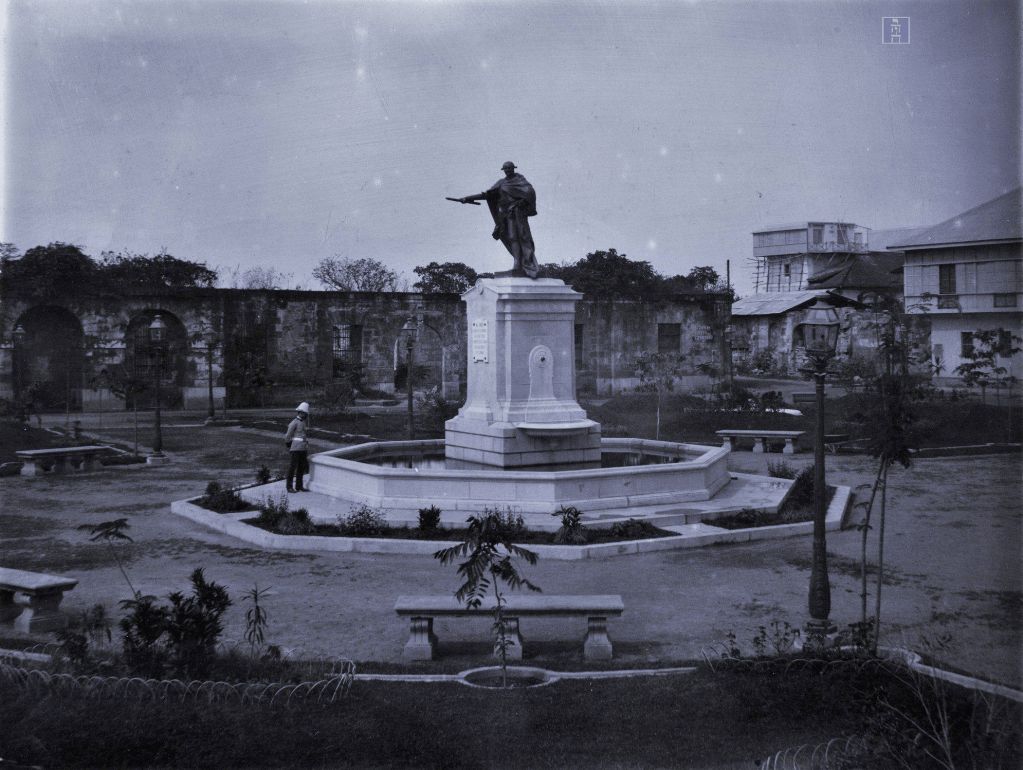
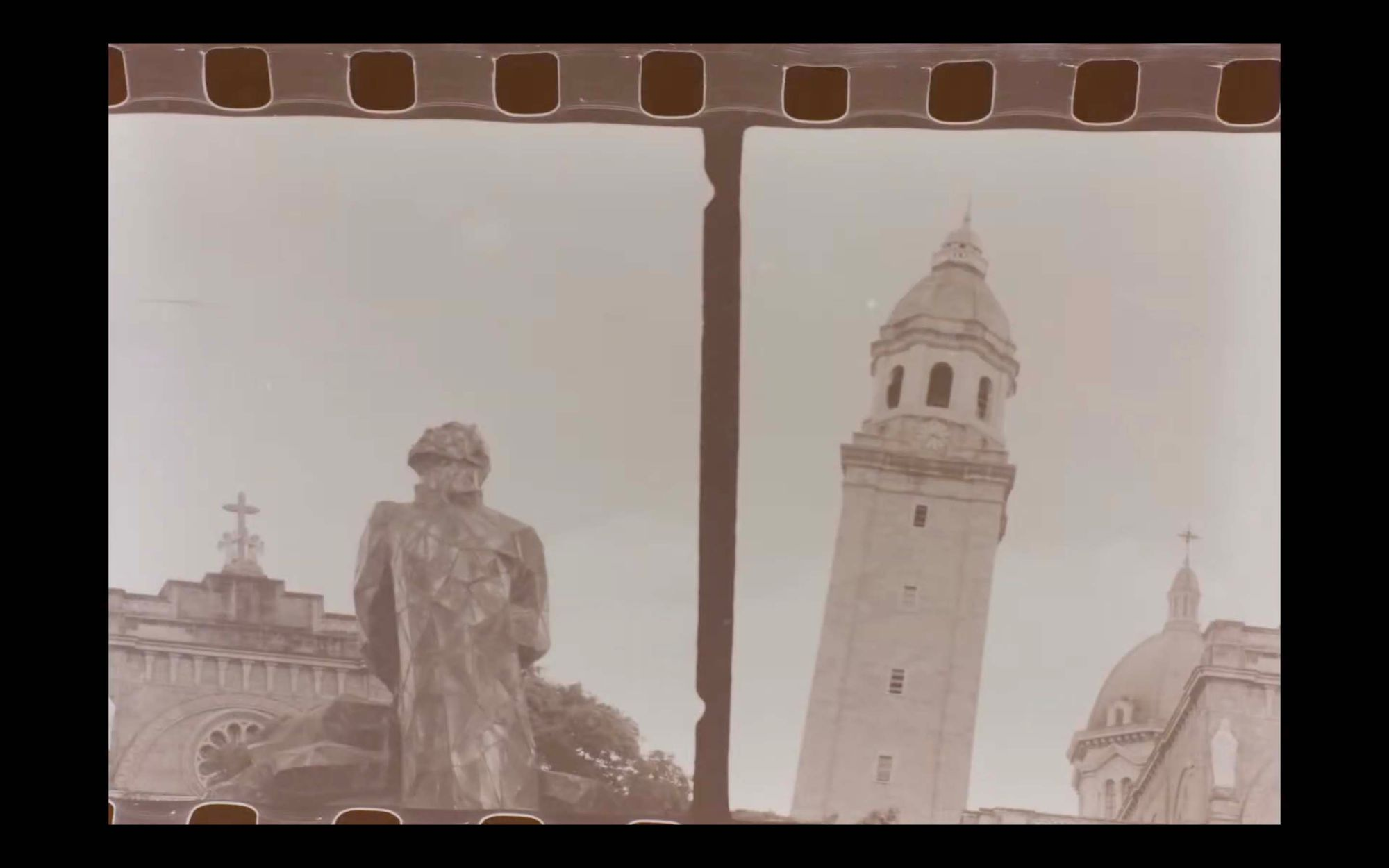
The history of the Carlos IV monument in Intramuros belongs to this longer history of speaking monuments. Photographs from the late nineteenth century document one of the few colonial-era monuments still standing in Manila. Until recently, however, the original purpose of its commission, the identities of its makers, and the details of its construction remained only partially understood.
The monument’s design is attributed to the Spanish sculptor Juan Adán, who produced the mold in 1796. The figure follows an official portrait of Carlos IV painted by Francisco de Goya in 1790. The cape, armor, and insignia correspond closely to that model.
Despite Adan’s apprehension on the capabilities of Philippine artisans, the monument was not cast in Spain. Its bronze casting was completed in Manila at the Maestranza, originally a military foundry where Chinese mestizo laborers produced cannons and ammunition for the Spanish colonial army. For this project, the foundry was converted into a sculpture workshop.
The pedestal includes a granite tablet stating that the monument was fully installed in 1824. This followed the Andres Novales revolt that nearly overthrew the colonial government. The rebels succeeded in killing the governor-general, though it was the outgoing Governor Mariano Fernández de Folgueras rather than his successor. The installation of the monument should be understood in relation to that political crisis. It emerged during instability and attempted to restage colonial authority through public image-making.
At the same time, the monument reveals Manila society becoming increasingly capable of reproducing colonial forms of civic and artistic life. Its production required coordinated systems of labor involving militia officers, artisans, quarry workers, transport laborers, merchants, and foundry workers. While it is common to perceive the monument as functioning as royal propaganda, it can also be understood as historical evidence of an emerging colonial public sphere.
Archival records identify several individuals involved in the project. Mateo Villanueva, a foundry master previously imprisoned and later exonerated for robbery at the Maestranza, participated in the work. Felipe Alonso, who had worked on casting a bell for the Manila Cathedral, also contributed technical expertise. Oversight fell to Ambrosio Casas, a captain of a local militia, and Damian Domingo’s future father-in-law.
Carlos Quirino dismisses the possibility that Damian Domingo, who later founded the first art academy in Manila, participated in the project as a minor assistant. The claim originates from Alfonso Ongpin, a direct descendant, and remains unresolved.
At the time, most artistic production in the Philippines remained small-scale. Ivory and wood dominated the production of religious objects. Large-scale bronze sculpture was uncommon. Documents refer to an unnamed “famous Indian professor” who assisted in adapting small-format artisanal techniques to monumental casting.
The monument’s pedestal required stone extracted from Mariveles in Bataan beginning in 1807. Military officers and soldiers supervised the quarrying process. Transporting the stone to Intramuros took approximately four months. Ambrosio Casas and his militia coordinated quarry and foundry work while relying on supply networks involving Chinese merchants.
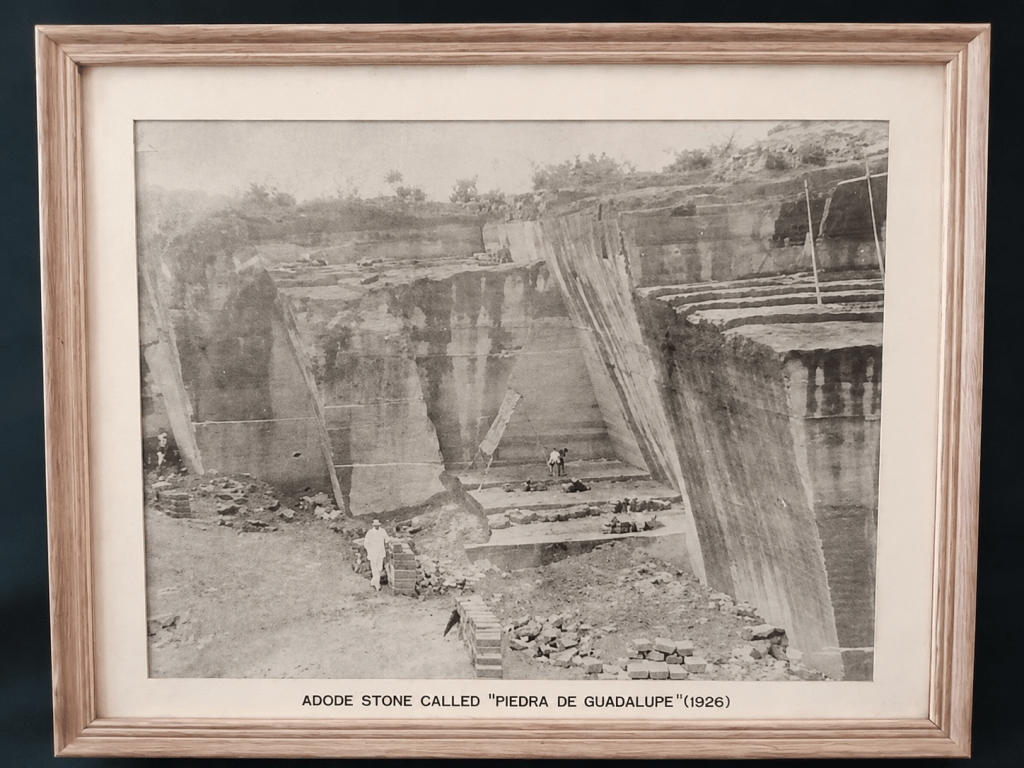
Expense ledgers from April 1807 record increasing construction costs. Wages were paid to boilermakers, stonemasons, carpenters, and bricklayers. In 1808, additional stone was purchased from Guadalupe. The volcanic tuff quarried there had long supplied major colonial construction projects in Manila, including the walls of Intramuros and Fort Santiago, whose fortifications began under Gómez Pérez Dasmariñas in 1590. By 1809, materials for casting and finishing had also been acquired, including lead, copper wire, and whetstones imported from China.
An 1825 painting depicting the monument’s inauguration presents the statue surrounded by a circular structure, low pedestals, and an artificial garden. Colonial authorities dominate the ceremony. The workers responsible for quarrying, transport, casting, and construction are absent.
By the late nineteenth century, the monument had already been altered. The cross visible in earlier representations had disappeared, suggesting damage or vandalism.
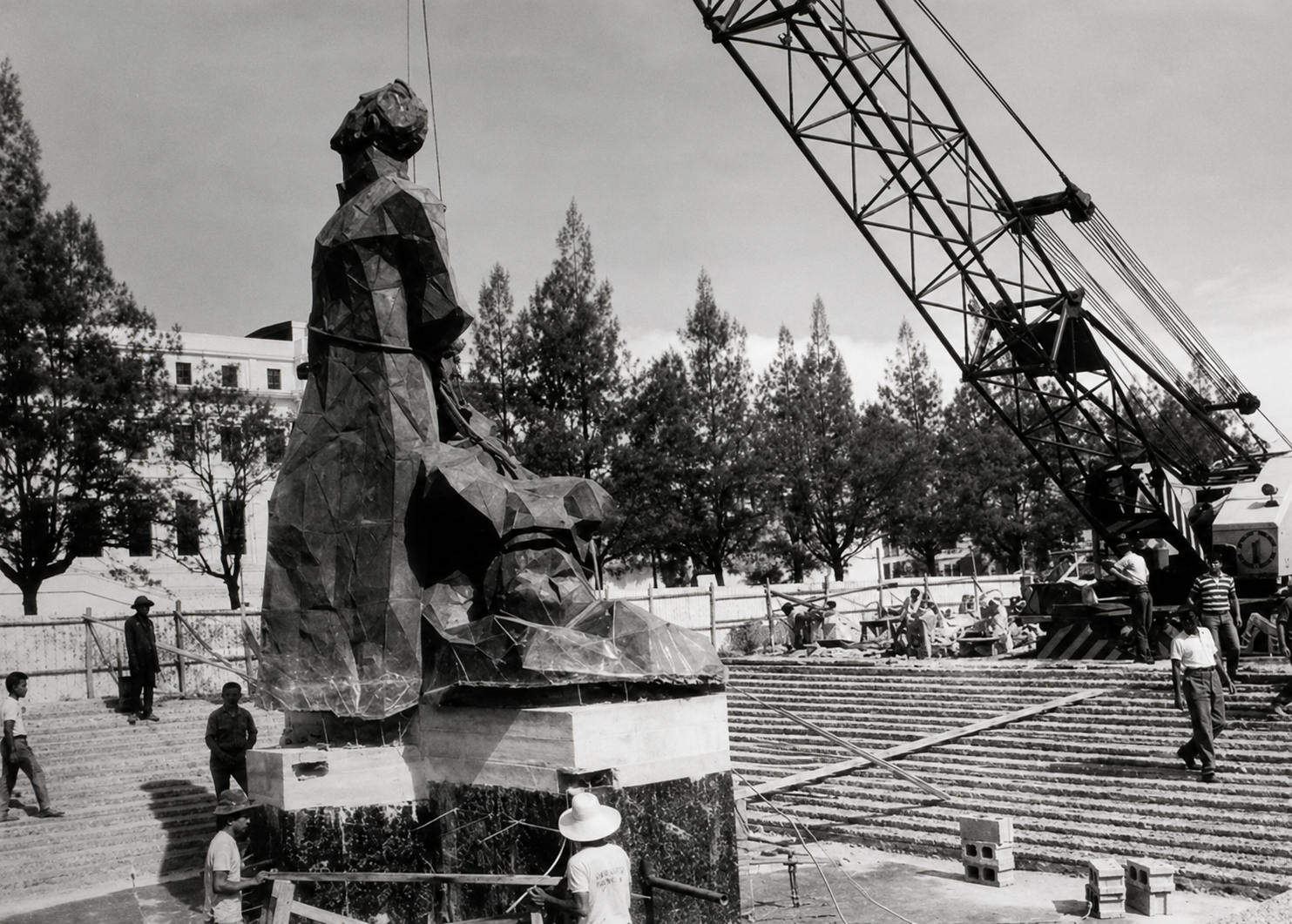
The monument was removed in the 1960s during a period of anti-colonial and nationalist activity (see photo by Teodulo Protomartir above). It was replaced by a monument to Gomez, Burgos, and Zamora by Solomon Saprid. Similar acts of removal have occurred elsewhere whenever monuments become identified with older political systems. Monuments become targets because they function as substitutes for political authority and the image stands in for the system it represents.
Comparable episodes can be seen in the destruction of royal monuments during the French Revolution, the removal of Soviet monuments after the collapse of the USSR, or more recently the toppling of Confederate statues in the United States during the Black Lives Matter protests.
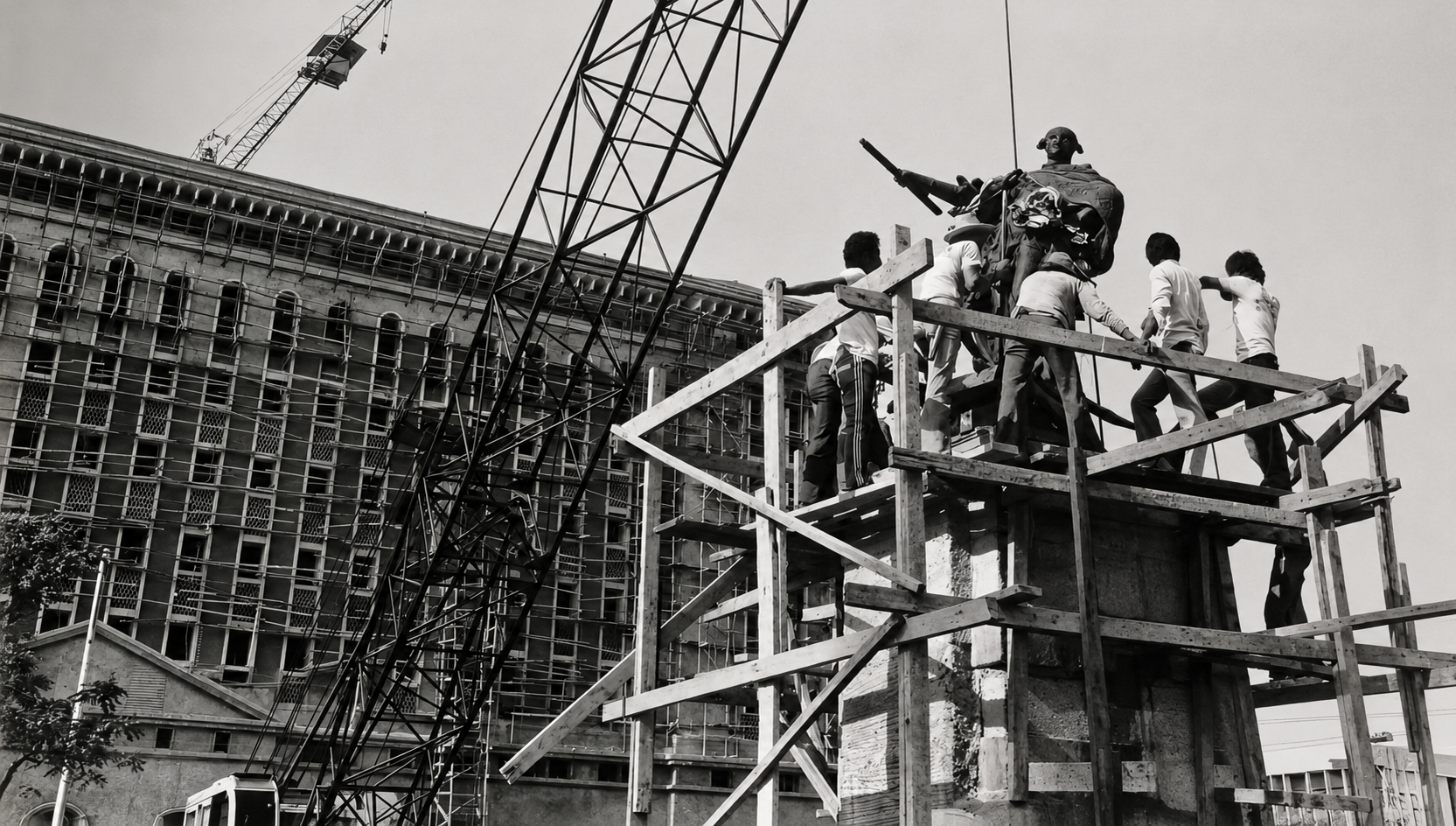
In 1978, under the regime of Ferdinand Marcos, the Carlos IV monument was reinstalled during the visit of Juan Carlos I. By then, a different explanation for its origins had become widely accepted. The statue was reframed as a gesture of gratitude for the introduction of the smallpox vacuna during the reign of Carlos IV, whose government sponsored the Balmis Expedition that brought vaccination to the Philippines in 1805.
Yet this interpretation does not fully align with the chronology of the monument itself. Archival records show that the commission had already begun in 1796, nearly a decade before the vaccine expedition arrived. Art historian Pedro Luengo Gutiérrez suggests that the later association with vaccination may have been a retrospective reinterpretation rather than the monument’s original purpose.
Through the revival of the false narrative of its commission inscribed in a granite tablet, the Carlos IV monument was able to speak in the same sense as Pasquino. This excellent article by urban historian Ian Morley gives as an insight into how colonial monuments in Manila, accumulated commentary, reinterpretation, and political projection across time that allowed for their survival.
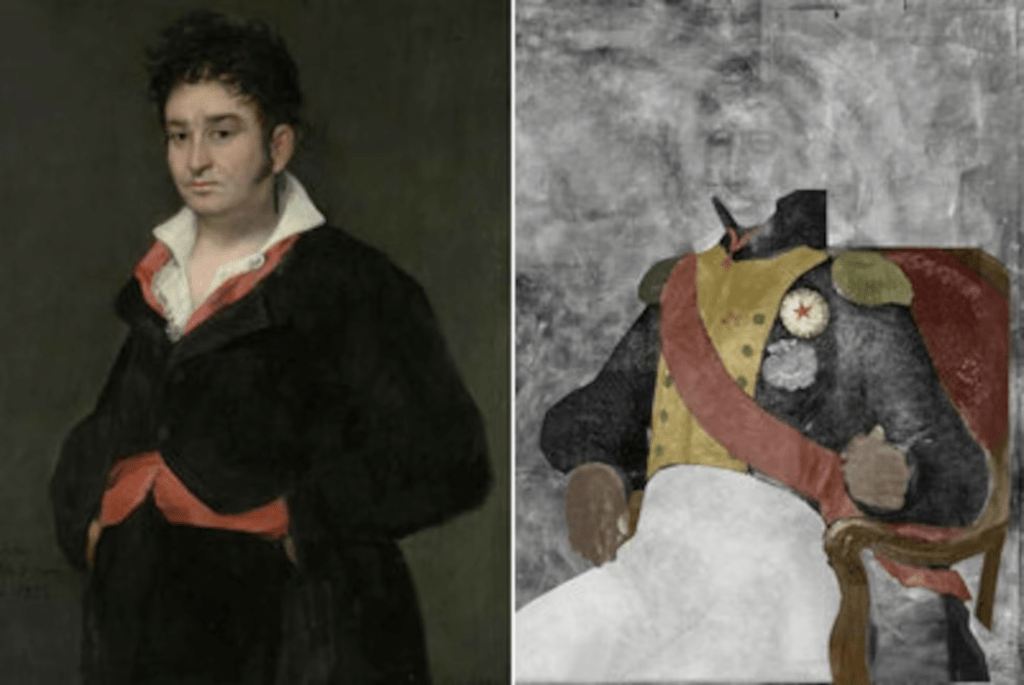
There is a useful parallel in Goya’s Portrait of Don Ramón Satué, painted in 1823 and now in the Rijksmuseum. On the surface, the painting depicts Ramón Satué, a judge in Madrid, standing in black suit and red vest. in 2011, an X-ray research by Joris Dik and Koen Janssens revealed another portrait beneath the visible image: a senior French official, possibly Joseph Bonaparte, painted around 1810 during the Peninsular War. After 1820, that image became politically dangerous and was painted over.
Monuments, like paintings, can carry older political meanings even when later regimes attempt to overwrite or reinterpret them. New meanings accumulate without entirely erasing earlier ones.
This practice is not unfamiliar in the Philippines. During protests against tuition fee increases in 2006, I fondly recall being tasked to climb Guillermo Tolentino’s UP Oblation and drape it with black cloth. The monument temporarily ceased functioning as a static commemorative object and became part of a living political event.
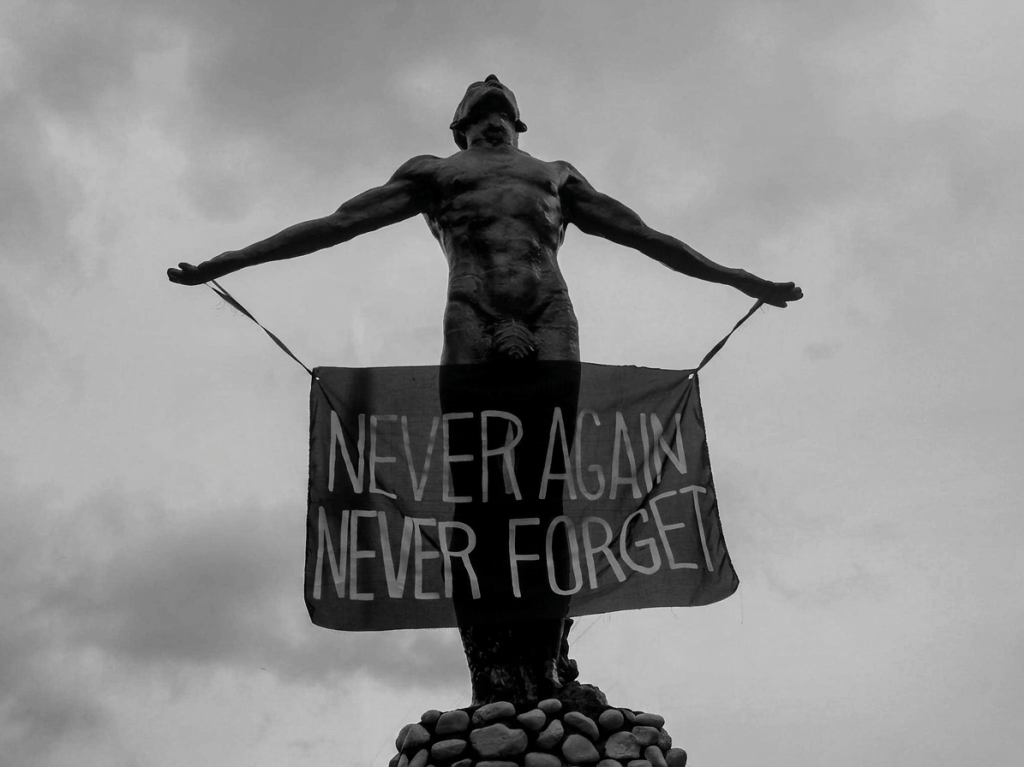
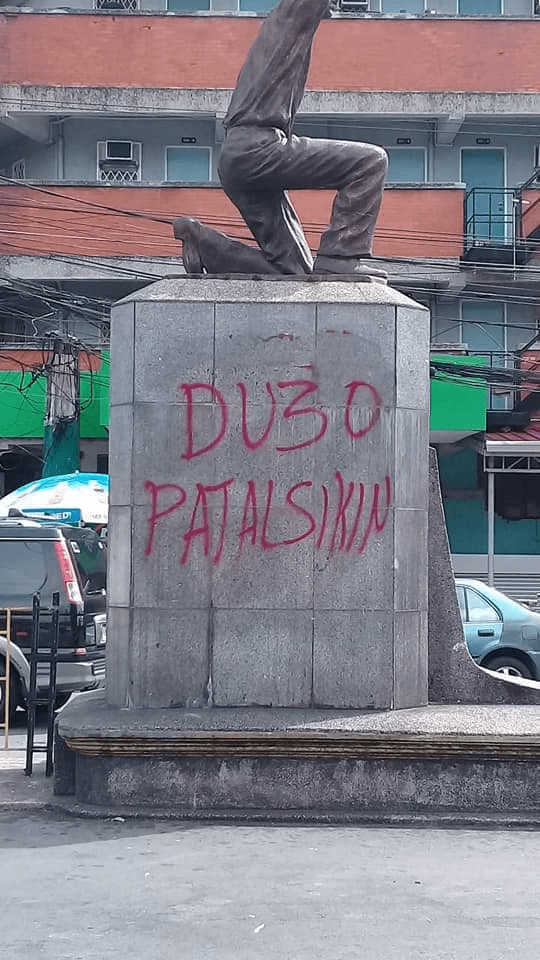
One might also think of the repeated repainting and defacement of the EDSA Shrine during moments of political unrest, or the periodic contestations surrounding the Libingan ng mga Bayani after the burial of Marcos there in 2016. These sites continue to absorb competing narratives because monuments are never fully closed objects. They remain active within public memory.
The Carlos IV monument speaks in these senses: it speaks through the labor, materials, and politics embedded in its construction, and it speaks through the reinterpretations later attached to it. Like Pasquino, like Rizal’s pasquinades, and like the paskil pasted onto walls during moments of unrest, the monuments have always been part of the political language of the country.
 Geronimo Cristobal