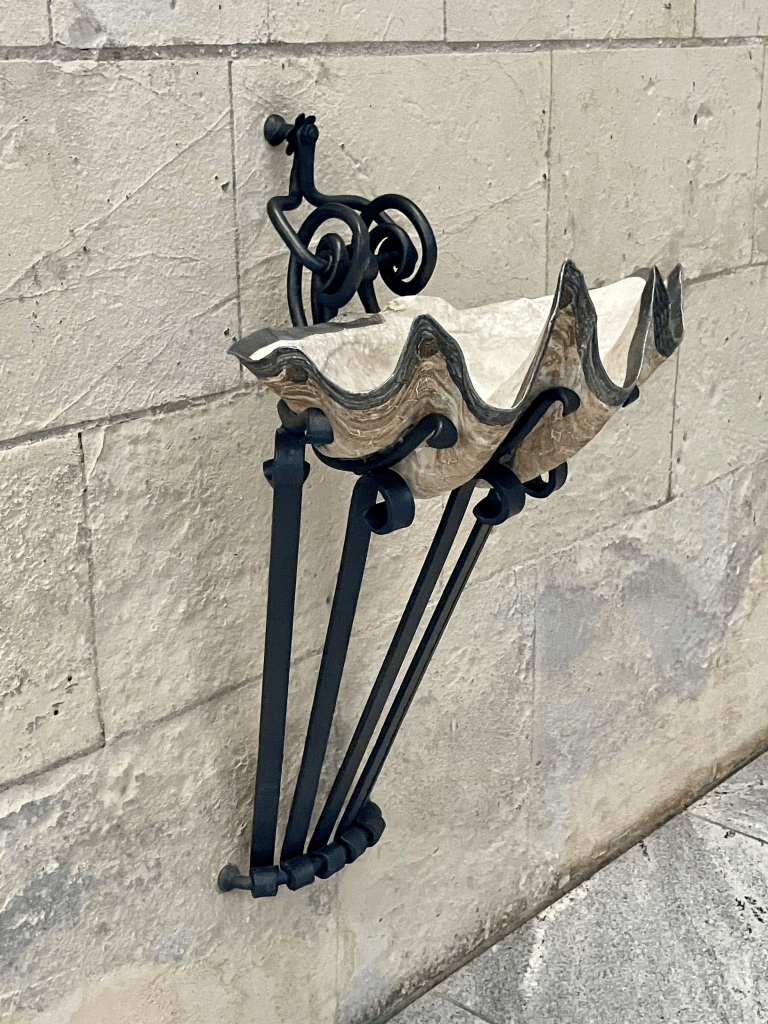
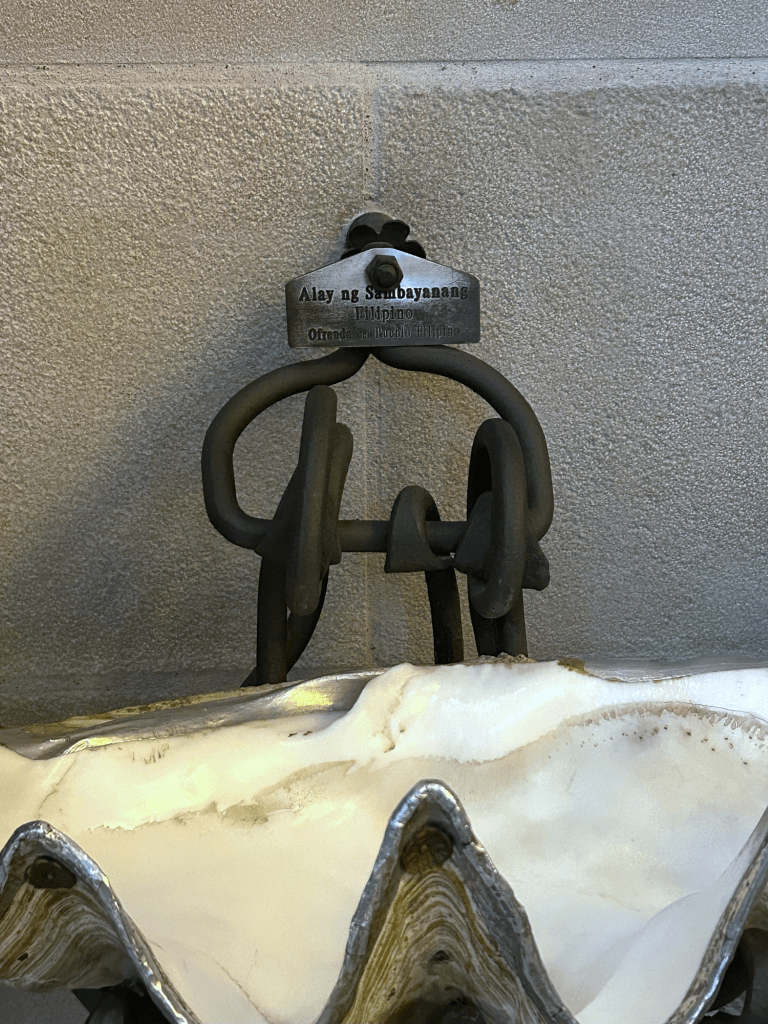
At the Sagrada Família, six holy water fonts made from Philippine giant clam shells (Tridacna gigas, taklobo) are easily overlooked. Donated by the Philippines before 1927 with additional shells in 2010 in line with Antoni Gaudí’s original design, each bears a bilingual plaque: “Alay ng Sambayanang Filipino / Ofrenda del pueblo Filipino.” 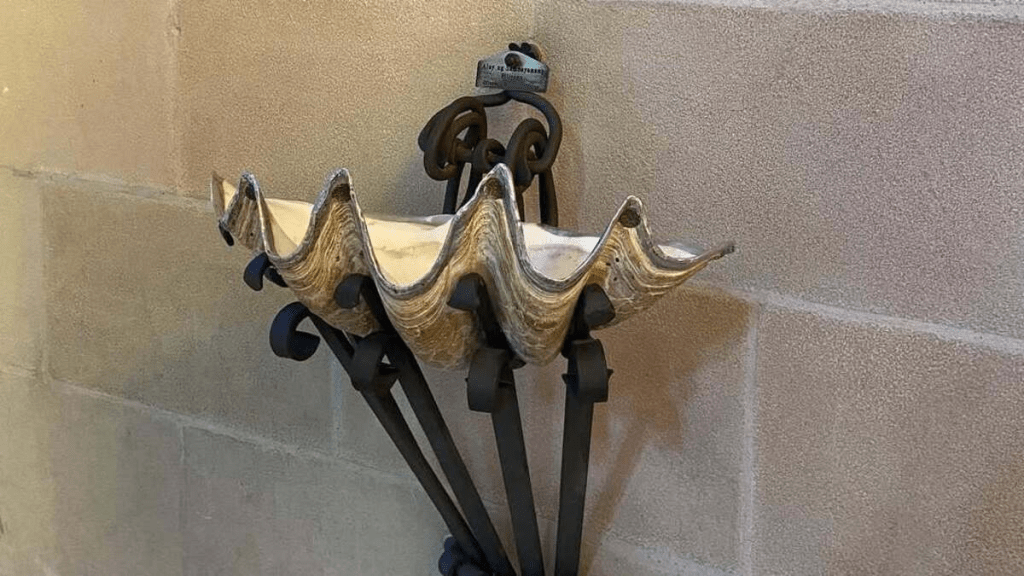
At the Sagrada Família, six holy water fonts made from Philippine giant clam shells (Tridacna gigas, taklobo) are easily overlooked. Donated by the Philippines before 1927 with additional shells in 2010 in line with Antoni Gaudí’s original design, each bears a bilingual plaque: “Alay ng Sambayanang Filipino / Ofrenda del pueblo Filipino.”
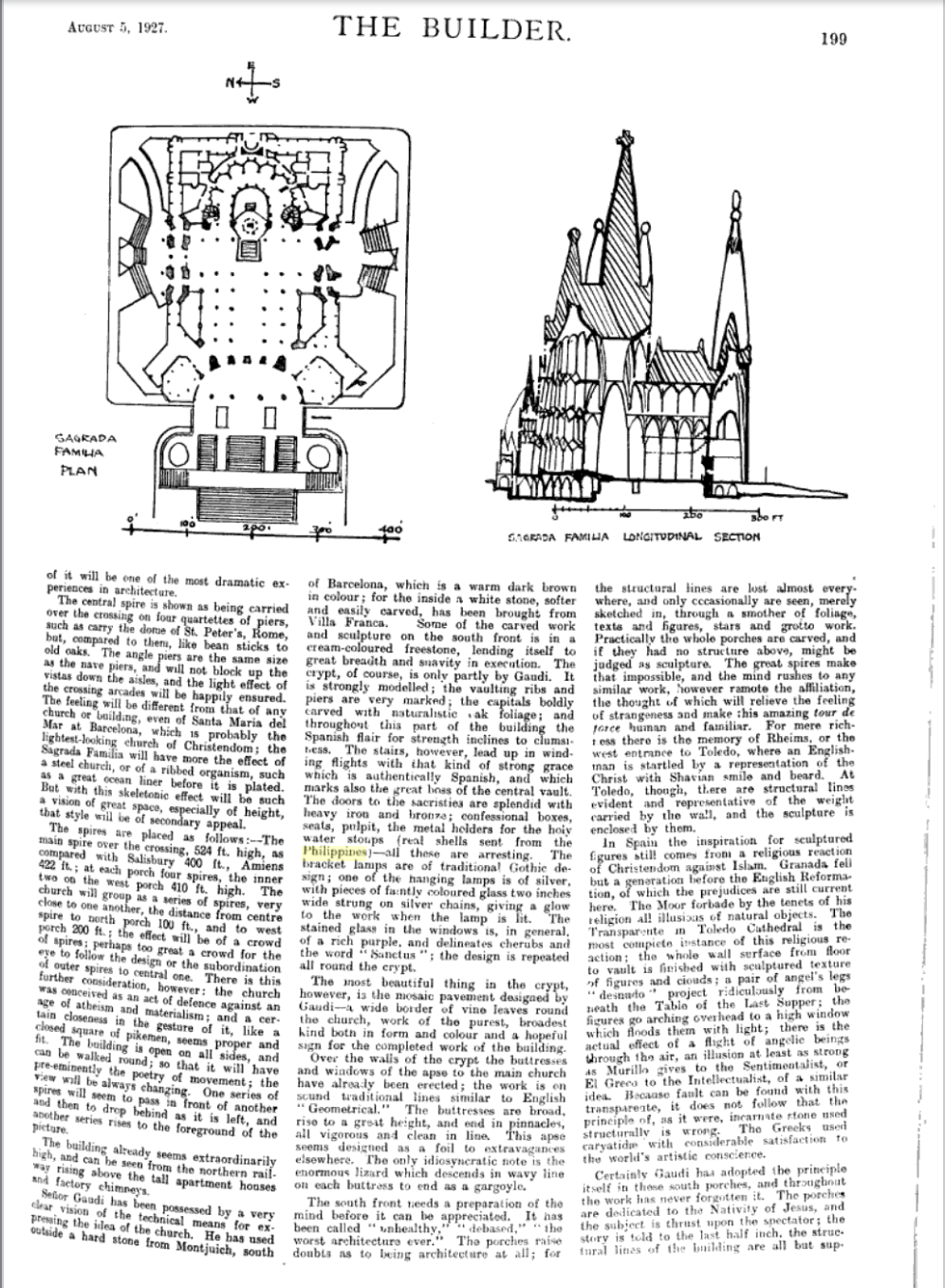
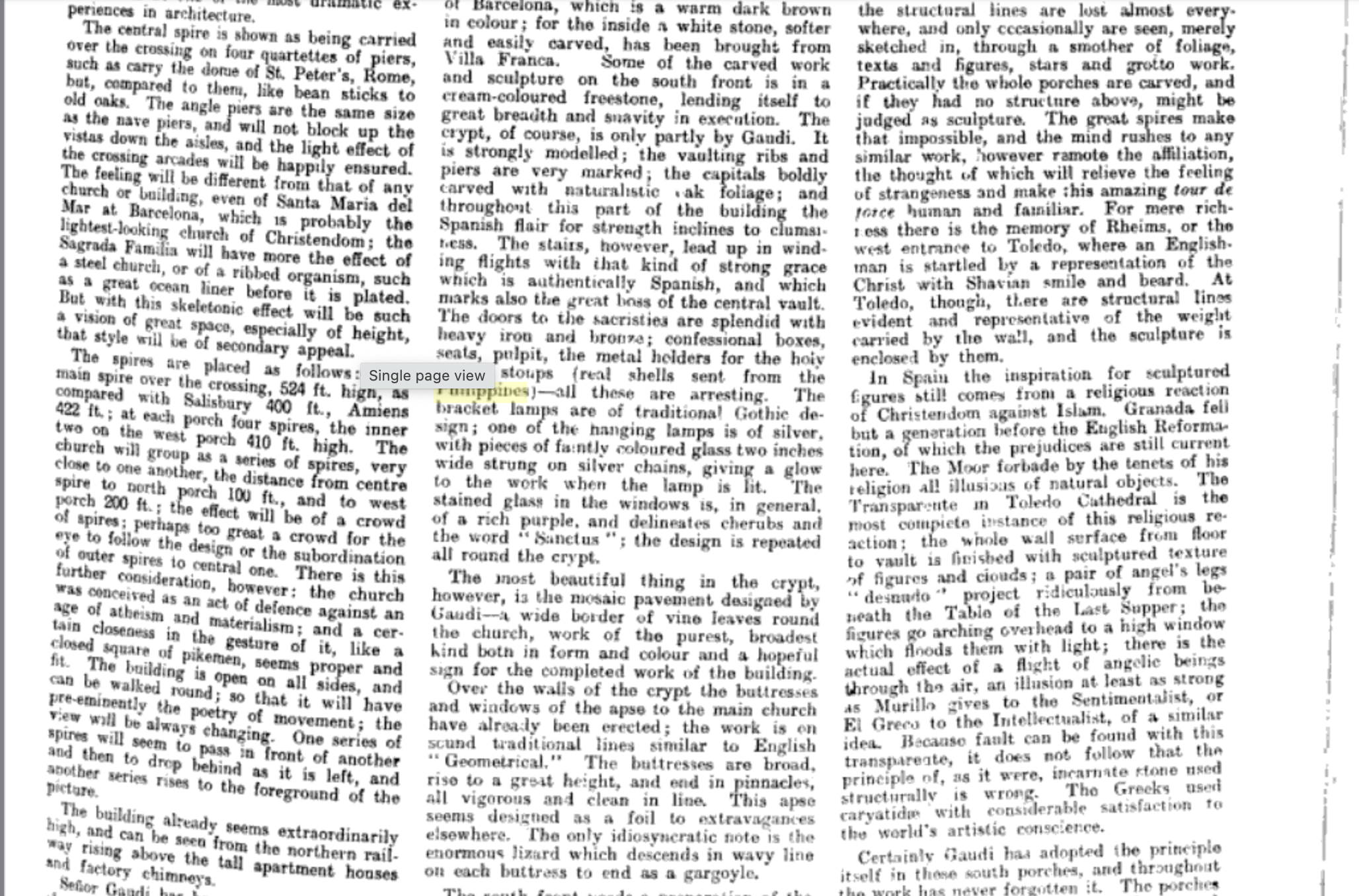
A set of giant clam shell holy water fonts from the Philippines is installed inside the Sagrada Família. According to a spot.ph article by Micah Avry Guiao, published on 4 November 2025, These objects were presented as a national gift to Spain in 2010. Contemporary records suggests, however, that the shells were already installed by 1927.
The installation consists of six shells of Tridacna gigas (taclobo), positioned at the rear of the basilica as holy water fonts. Each shell is accompanied by a plaque inscribed in Filipino and Spanish reading: “Alay ng Sambayanang Filipino / Ofrenda del pueblo Filipino.” The donation was formally transferred on 16 September 2010 to representatives of the Sagrada Família Foundation, including construction director Jordi Bonet and foundation president Joan Rigol i Roig. Philippine diplomatic officials described the gesture as an expression of historical, social, and cultural ties between the Philippines and Spain.
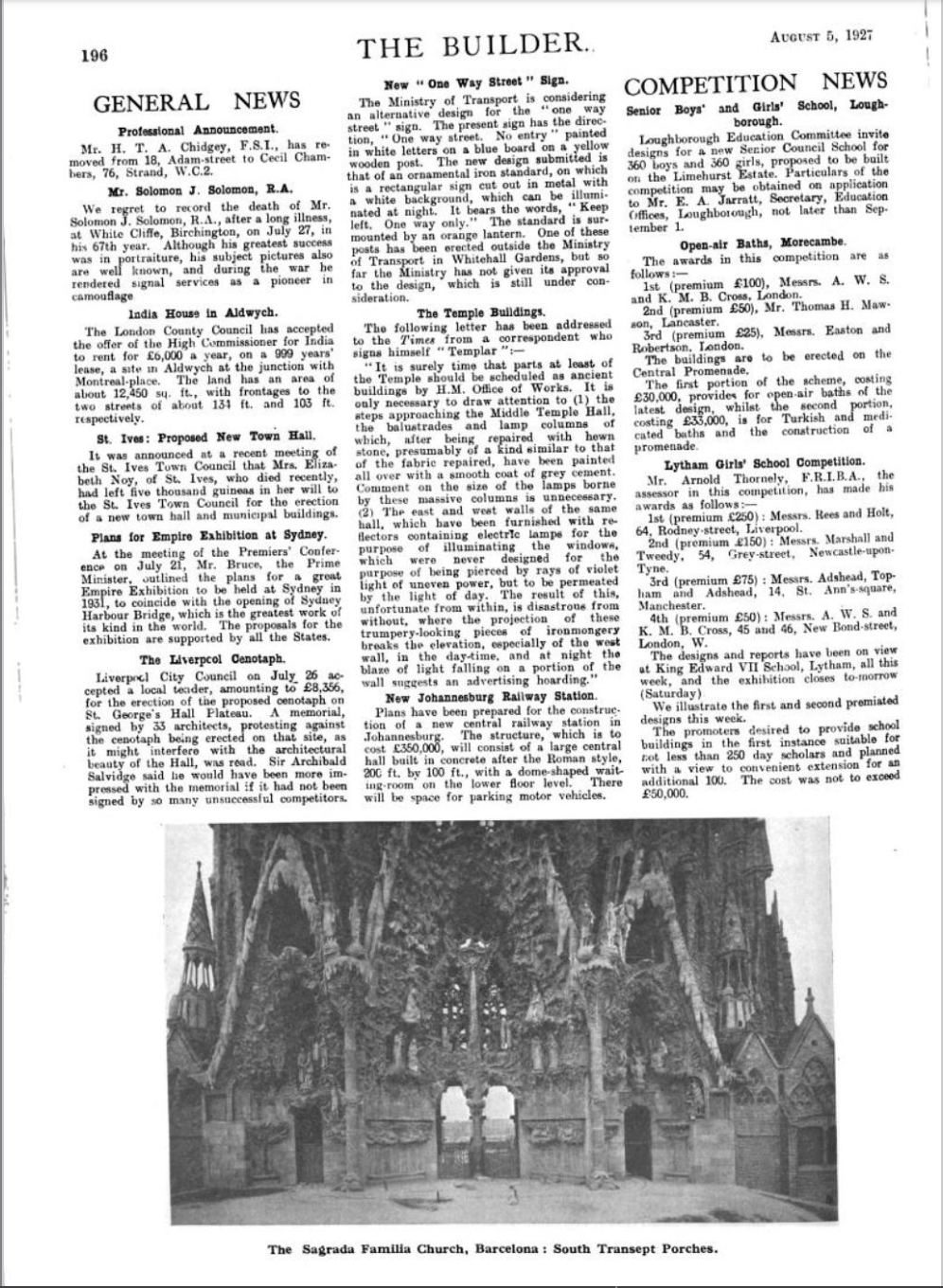
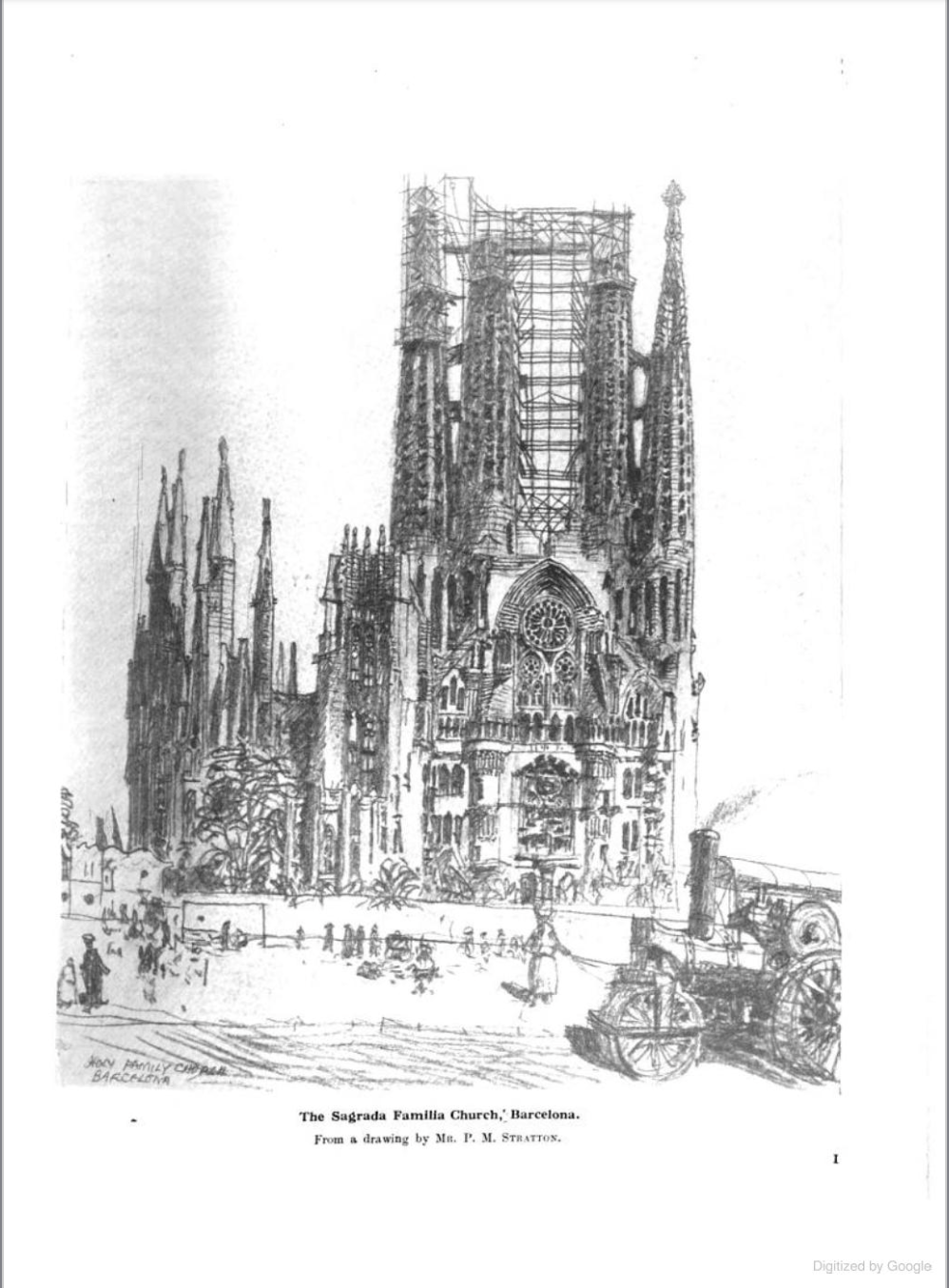
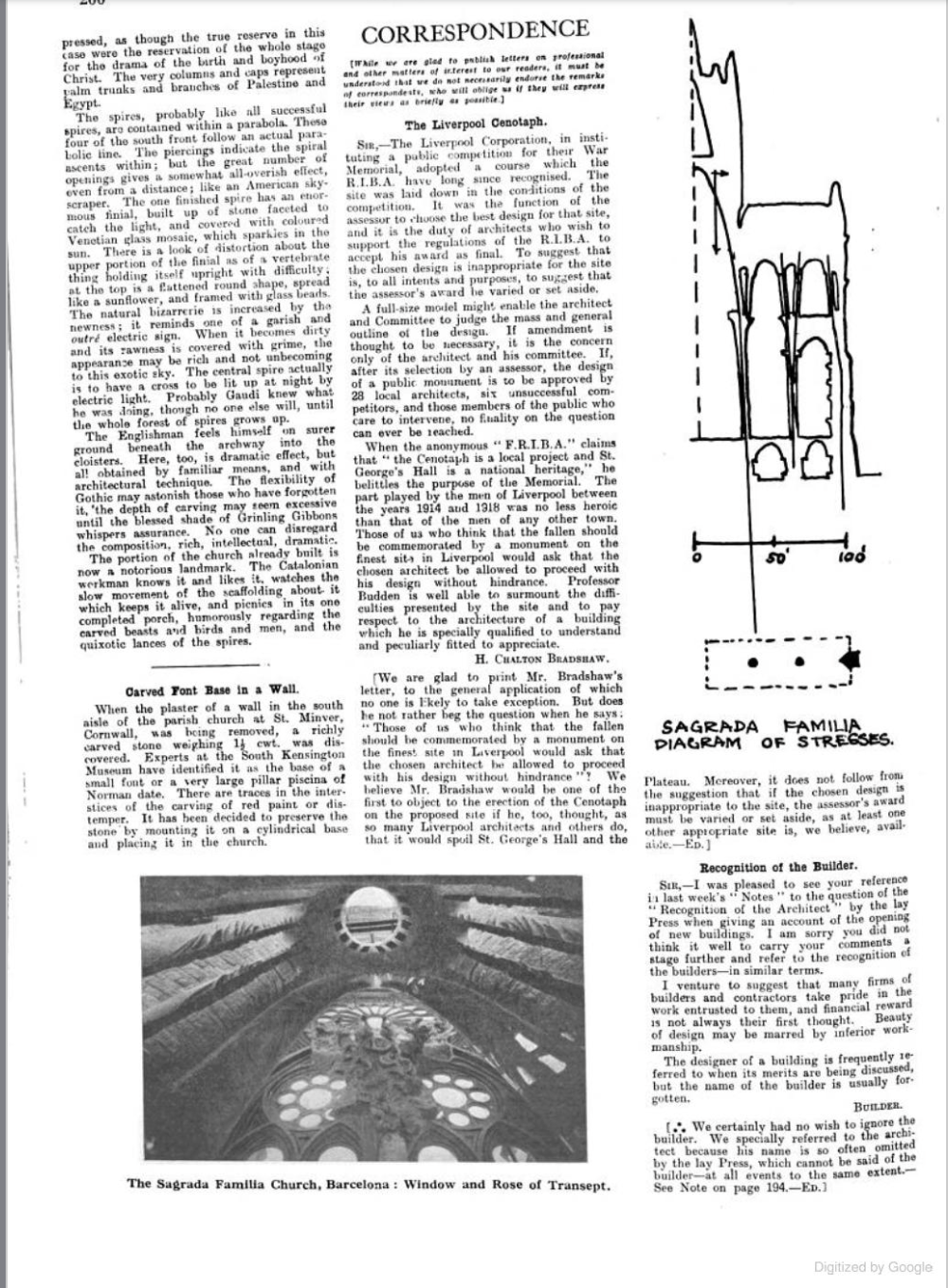
The use of giant clam shells for holy water stoups corresponds to the original design intentions of Antoni Gaudí, who directed the construction of the basilica from 1883 until his death in 1926. Archival accounts indicate that Gaudí intended large marine shells to serve as holy-water fonts and designed their supports accordingly.
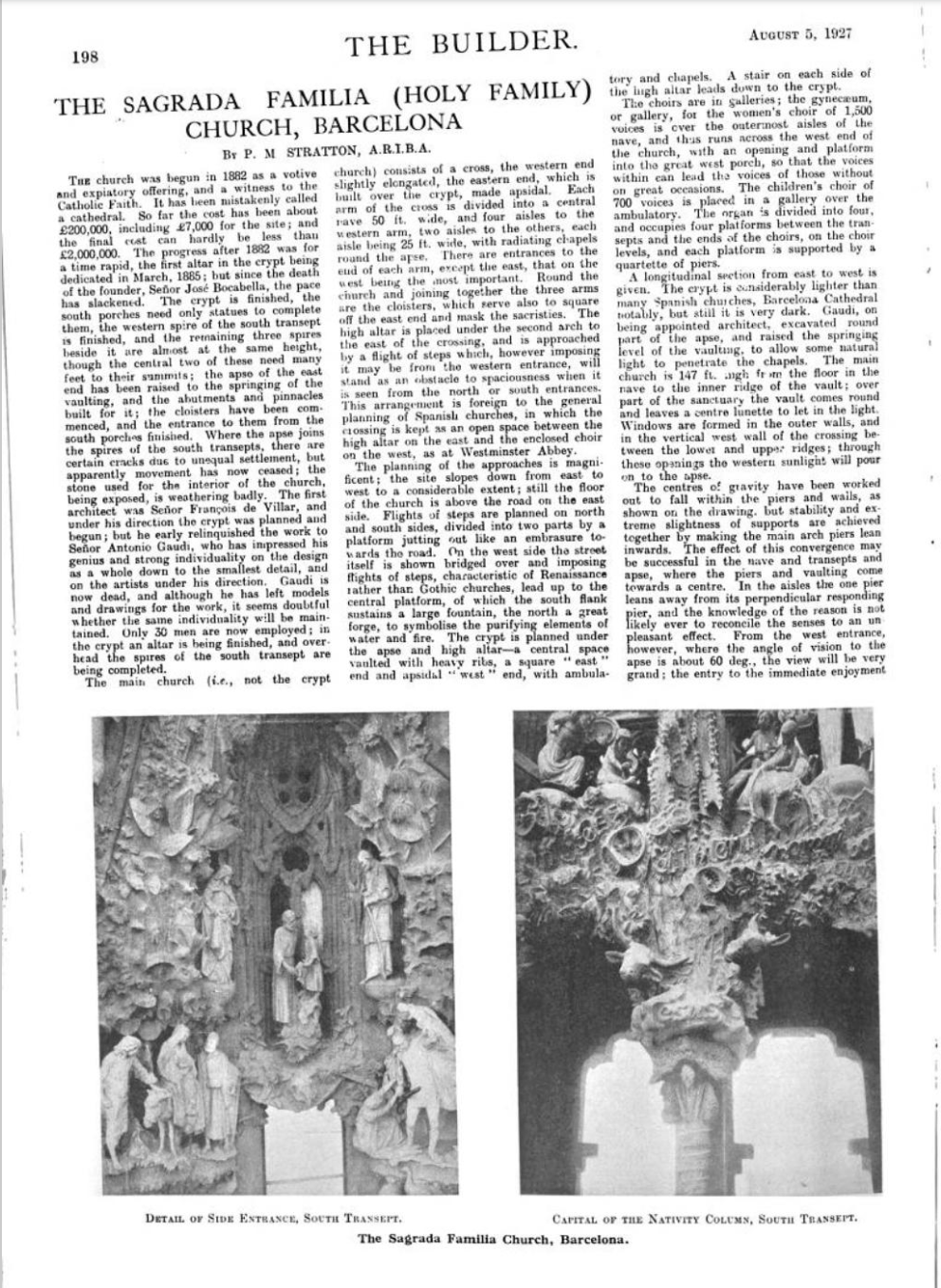
His instruction aligns with specific formal strategies across his works. In Casa Batlló, the vertebra-like staircase handrail, swelling door frames, and spiraling ceiling medallions evoke skeletal and molluscan forms, while the blue-tiled light well produces a submerged, nacre-like luminosity. In Park Güell, the serpentine bench coated in iridescent trencadís mosaic and the shell-like ceiling medallions of the Hypostyle Hall extend this marine and mineral vocabulary. The Crypt of Colònia Güell develops catenary arches and inclined columns that mimic geological and skeletal growth, later expanded in the branching columns and canopy vaults of the Sagrada Família.
The shells currently in place were sourced and installed decades after his death as part of the continued execution of his plans. Estimates cited in contemporary reports place the market value of giant clam shells at approximately ₱20,000 per kilogram.
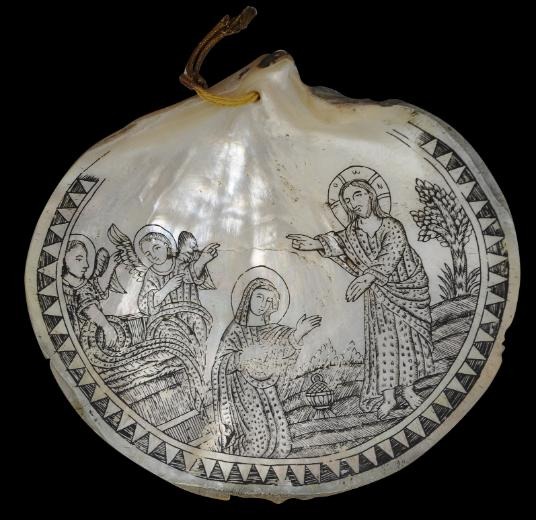
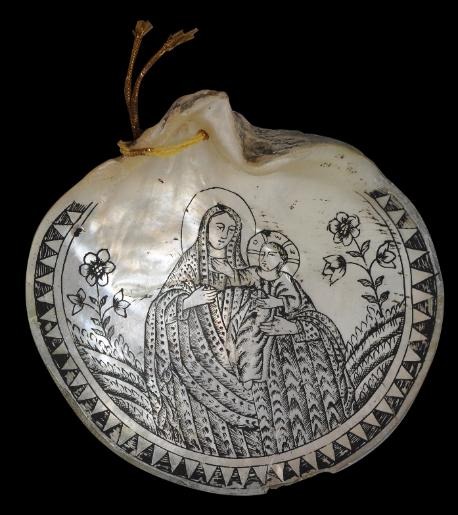
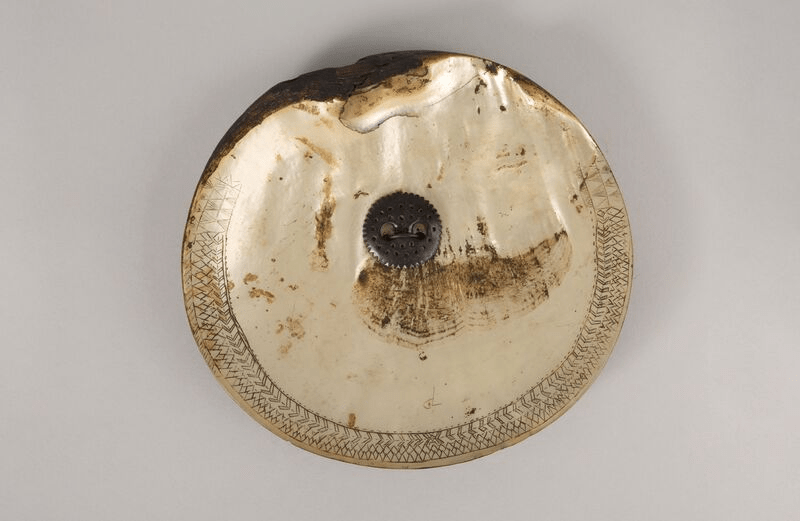
The presence of these Philippine shells in a major European basilica continues a documented tradition of shell use in Catholic ritual practice in the Philippines during the Spanish colonial period. Seventeenth- to eighteenth-century baptismal shells survive as examples of this practice. These objects, made from mother-of-pearl and mussel shells, were used to pour water during baptism. Their engraved surfaces combine Christian iconography with established local carving techniques. Surviving specimens include shells depicting the Virgin and Child, the resurrected Christ appearing to Mary Magdalene, and fish forms referencing early Christian symbolism.
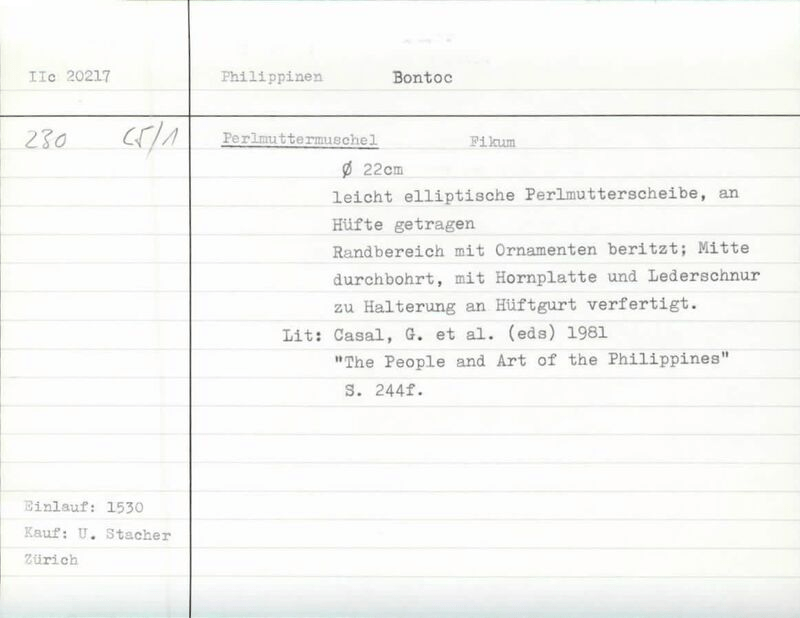
This tradition developed from precolonial shell-working practices in the archipelago. Ethnographic records document that groups such as the Bontoc produced ornaments from mother-of-pearl, engraving and darkening the surfaces with pigment. Spanish missionaries incorporated these techniques into ecclesiastical objects, producing hybrid forms that integrate Baroque motifs—halos, floral borders, and narrative scenes—with indigenous methods of incision and surface treatment. These baptismal shells functioned as liturgical vessels within the sacrament of baptism, linking marine material to the theological symbolism of water, purification, and rebirth.
In the Spanish colonial period, shells made from mother-of-pearl and mussel were used in Catholic baptismal rites to pour holy water. Surviving examples from the seventeenth and eighteenth centuries show engraved surfaces combining Christian iconography with local carving techniques derived from precolonial shell-working practices, including incision and pigment darkening.
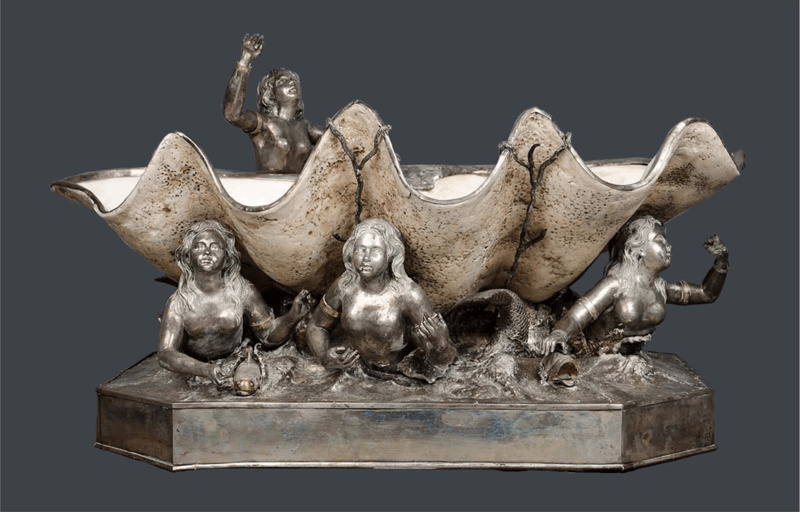
In the early twentieth century, large clam shells were incorporated into formal display objects. The Zamora Table Service (Manila, 1904), produced by Fernando and Tomás Zamora for the Louisiana Purchase Exposition, includes a large taclobo shell used as a punch bowl mounted on a silver-plated base with mermaids and Tipos del País figures. The object formed part of the representation of Philippine craftsmanship within a colonial exhibition context.
Across these uses, shells functioned as containers and as worked surfaces. Their concave form enabled use as basins, while their polished nacreous material was valued for its reflective qualities. These properties supported their adaptation in both ecclesiastical and decorative contexts in the Philippine archipelago
The giant clam shell fonts in the Sagrada Família extend this material and liturgical continuity. Both the colonial baptismal shells and the modern clam shell fonts serve as containers for holy water, situating marine material within Catholic sacramental practice. The 2010 Philippine donation establishes a direct connection between early modern shell-based liturgical objects from the archipelago and their incorporation into a major unfinished basilica in Barcelona, where construction began in 1882 and continues into the present.
 Geronimo Cristobal