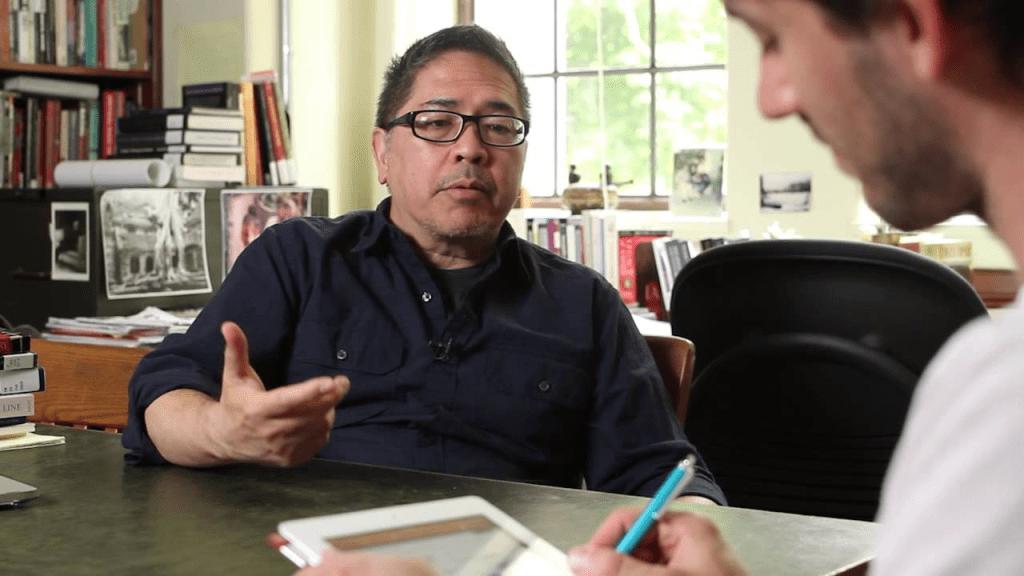
Vicente L. Rafael (February 16, 1956 – February 21, 2026) was a pioneering historian of the Philippines whose work transformed the study of colonialism and political power. A longtime professor of History and Southeast Asian Studies at the University of Washington, Rafael reshaped Philippine historiography by demonstrating how empire operates through language and the fraught and unstable work of translation.
Educated at Ateneo de Manila University and later at Cornell University (PhD, 1984), Rafael was mentored by Benedict Anderson, James Siegel, Oliver Wolters and David K. Wyatt. He first gained international recognition with Contracting Colonialism: Translation and Christian Conversion in Tagalog Society under Early Spanish Rule (Cornell University Press, 1988). In this landmark study, he argued that Spanish missionary authority depended on translation into Tagalog and that these acts of translation generated misunderstandings that limited colonial control and enabled local agency. He extended this inquiry in White Love and Other Events in Filipino History (Duke University Press, 2000), Motherless Tongues (Duke University Press, 2016), and The Sovereign Trickster: Death and Laughter in the Age of Duterte (Duke University Press, 2022), where he examined the theatricality of contemporary authoritarianism.
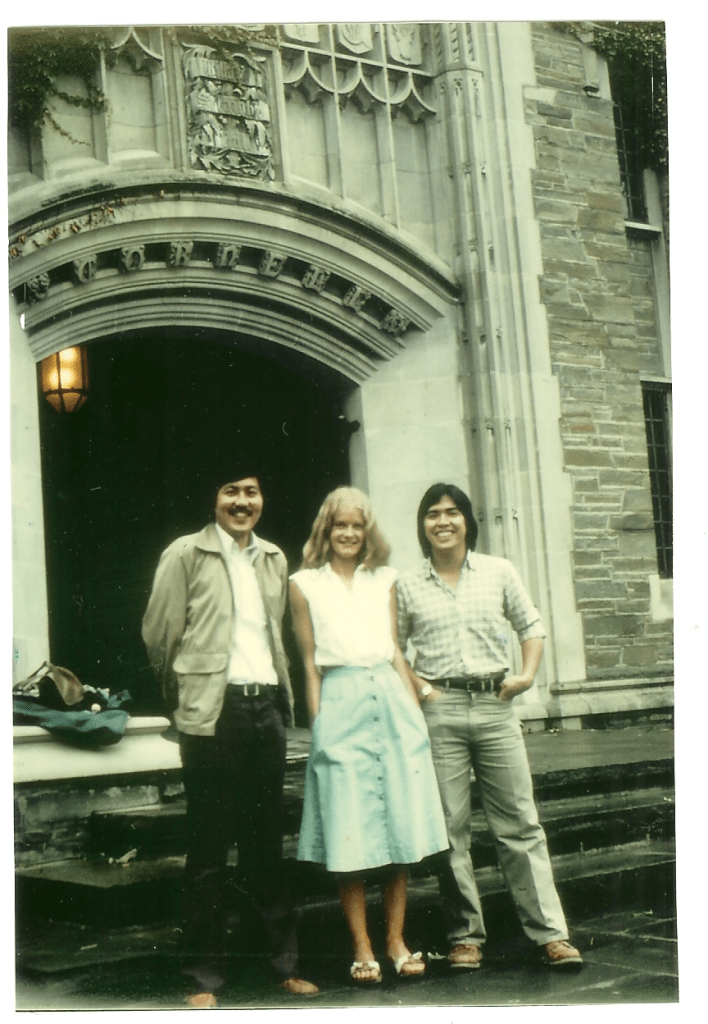
Before his long tenure in Seattle, Rafael taught at Ateneo de Manila University. Former student and human rights lawyer Tony La Viña recalled: “He taught my generation of Ateneans Philippine history… even then, as a newbie teacher, he was brilliant and provoked us, gave us new eyes to look at our past and understand our present.” Even with members of the Marcos family in class, La Viña noted, “that did not stop Vince from criticizing the old man Marcos when warranted by the topic.” Reading Rafael’s books later in life, he wrote, “always made me smarter and more important a better Filipino.”
Ateneo Professor Oscar Campomanes remembered him as a scholar of rare generosity: “He was always picking your brains… and inviting you to pick his,” shaping “a singular model for living the life of the mind… a vita contemplativa that is at the same time a vita activa.”
UC Berkeley Professor Leloy Claudio wrote: “We jokingly called you Tito Vince… Paalam, Tito Vicente Rafael: friend, interlocutor, mentor to many of us. Your contract is now with eternity, the promise is a foreignness we will all one day meet.”
Zeus Salazar, a senior historian who had public disagreements with Rafael, expressed his grief in a private message to Rafael’s wife, Lila Shahani, later shared by Salazar with this author. He wrote: “It is a tragedy for our country to lose a scholar who did his best to understand our destiny in a world where our trajectory has not always been easy to choose and sustain.”* He added in Tagalog: “He was brilliant. He is part of the difficult journey of understanding the destiny of this nation”**
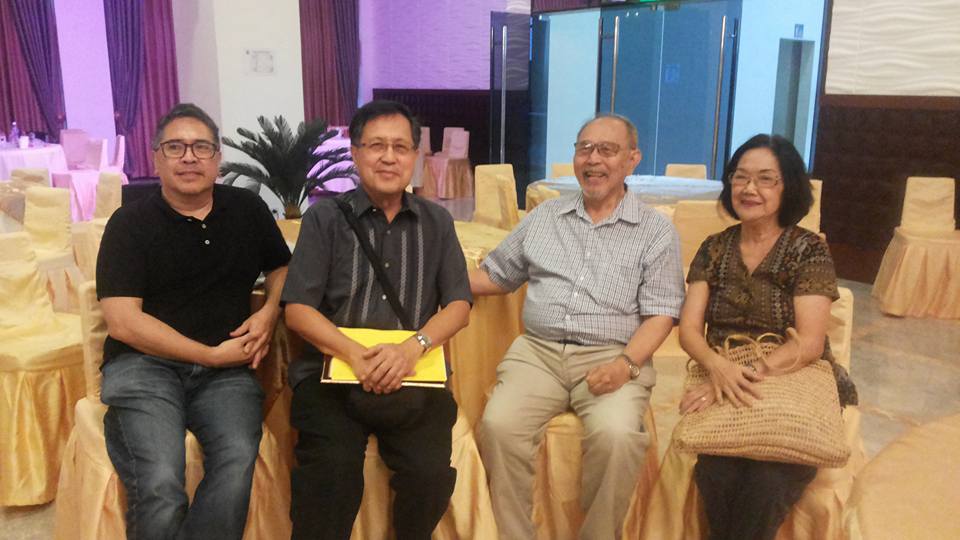
NYU Professor Adrian de Leon wrote, “He was kind. So endlessly kind. Even at his most rigorous, he taught me that there was love in engagement and critique. He celebrated his students – especially those I got to meet and share space with at UW – with so much joy. My work isn’t what it is without Vince, and I’m not where I am without him.”
In September 2023, Rafael returned to Cornell University to deliver the Gatty Lecture at Rockefeller Hall as part of the Southeast Asia Program’s lecture series. His talk, “The Authoritarian Imaginary: Intimacy and the Autoimmune Community in the Contemporary Philippines,” examined the persistence of structures of power that enabled Rodrigo Duterte’s overwhelming popularity despite the violence of the drug war and the devastation of the COVID pandemic. Rather than isolating authoritarianism in a single leader, Rafael asked how fantasies of sovereign power—of deciding who shall live and who shall die—circulated between ruler and ruled, and how communities themselves could become the ground upon which violence was normalised. The lecture returned to themes that had long animated his work: intimacies of translation and power, the fragile boundary between critique and complicity.
Writer and public intellectual Manolo Quezon described Rafael’s steady online engagement as “a kind of comfort… for all writers,” adding, “May we all realize the country is poorer for having lost a dedicated thinker and writer.”
In the months before his passing, Rafael returned to Manila and saw friends, family, former students, and colleagues. On December 10, 2025, he delivered what would be his final public lecture at Ateneo de Manila University, titled “Words the Color of Pulsating Flesh”: Frantz Fanon and the Politics of Translation.
Rafael’s scholarship insisted language and translation was both the instrument of empire and the site of its unraveling. He leaves behind his wife, Lila Ramos Shahani, and a body of work that redefined Philippine studies, along with generations who learned from him how to think historically, rigorously, and courageously.
Author’s note:
Last September 21, 2023, (during the 51st anniversary of the declaration of Marcos’s Martial Law) I was able to interview Dr. Vicente Rafael for a podcast hosted by Cornell’s Southeast Asia Program. He delivered the second lecture of that Fall term.
*“Je viens de recevoir la triste nouvelle du départ prématuré de Vince, ton époux bien aimé. Je regrette tant que nous n’ayons pas pu nous voir une dernière fois. C’est une tragédie pour notre pays de perdre ainsi un savant qui a fait de son mieux de comprendre notre destin dans un monde où notre trajectoire n’a pas toujours été facile à choisir et maintenir.”
***“Magaling siya. Kasama siya sa mahirap na pag-unawa sa tadhana ng ating bansa.”
 Geronimo Cristobal