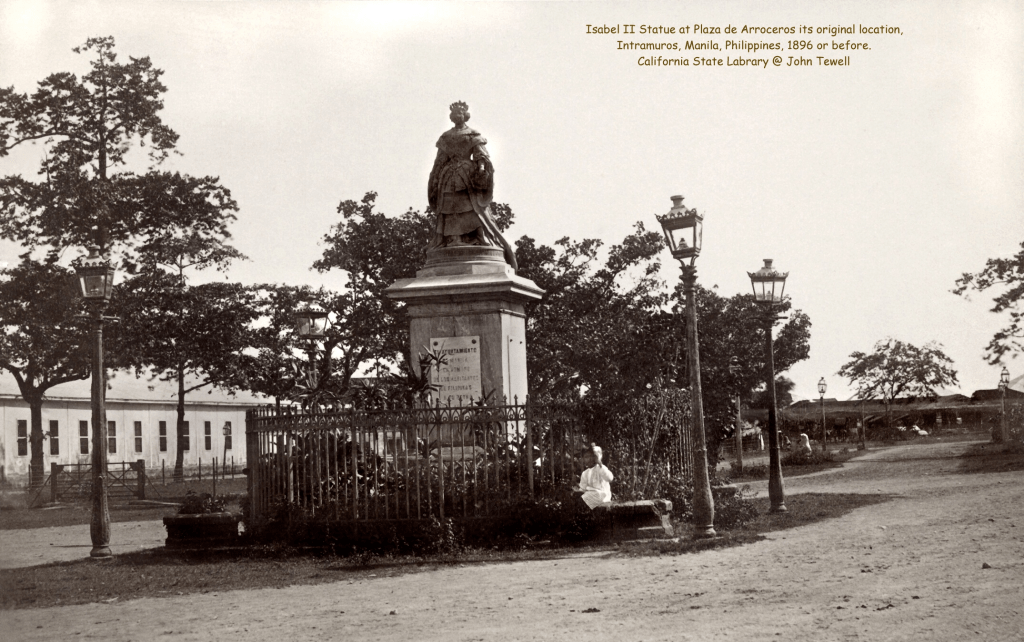
Photo courtesy of the California History Room Picture Collection, California State Library. Donated by Mrs. Frank Atkinson, February 16, 1948.
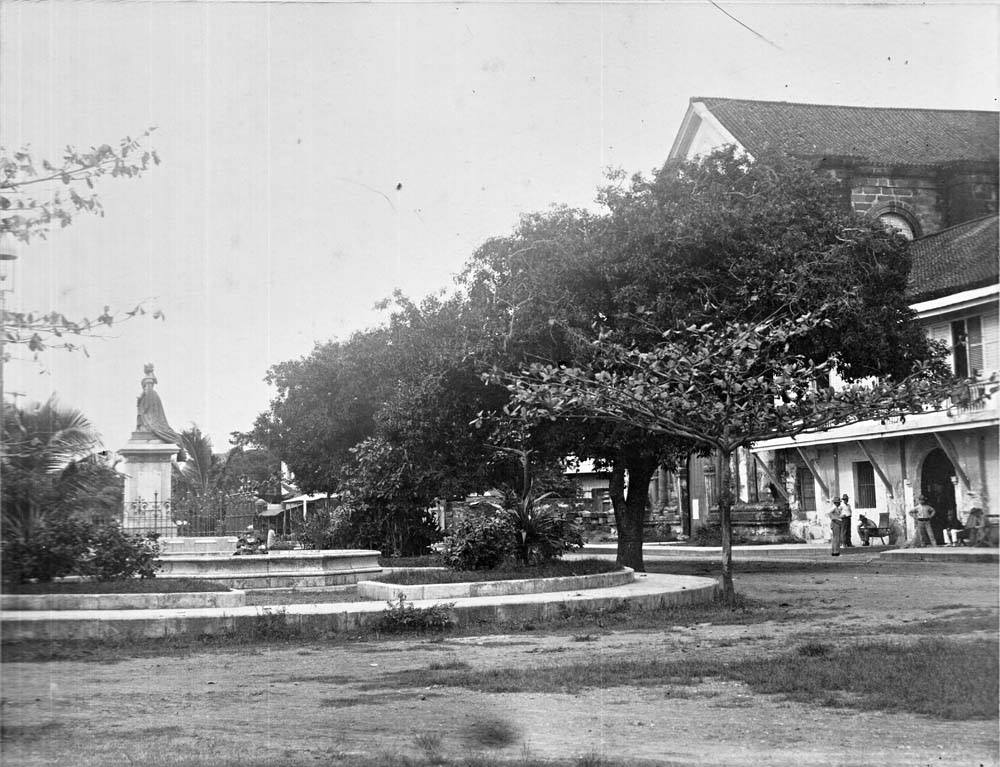
The statue of Queen Isabel II is one of few public artworks that survive from the time of Spanish colonial rule in the Philippines. Located in front of Puerta Isabel II in Intramuros, Manila, this bronze monument has weathered the vicissitudes of Philippine history and the shifting tides of politics and empire.
Commissioned in the mid-19th century and funded by donations collected in 1854 and 1855, the monument was the work of Spanish sculptor Ponciano Ponzano. Known for his mastery in Neoclassical design, Ponzano crafted a statue that embodied the regal poise of Queen Isabel II of Spain. It was unveiled on July 14, 1860, in Arroceros near Teatro Alfonso XII, a site now known as Plaza Lawton (modern-day Liwasang Bonifacio). The unveiling was accompanied by festive ceremonies, signaling both Manila’s deference to the Spanish crown and its embrace of monumental public art (Torres 2005, 65–66).
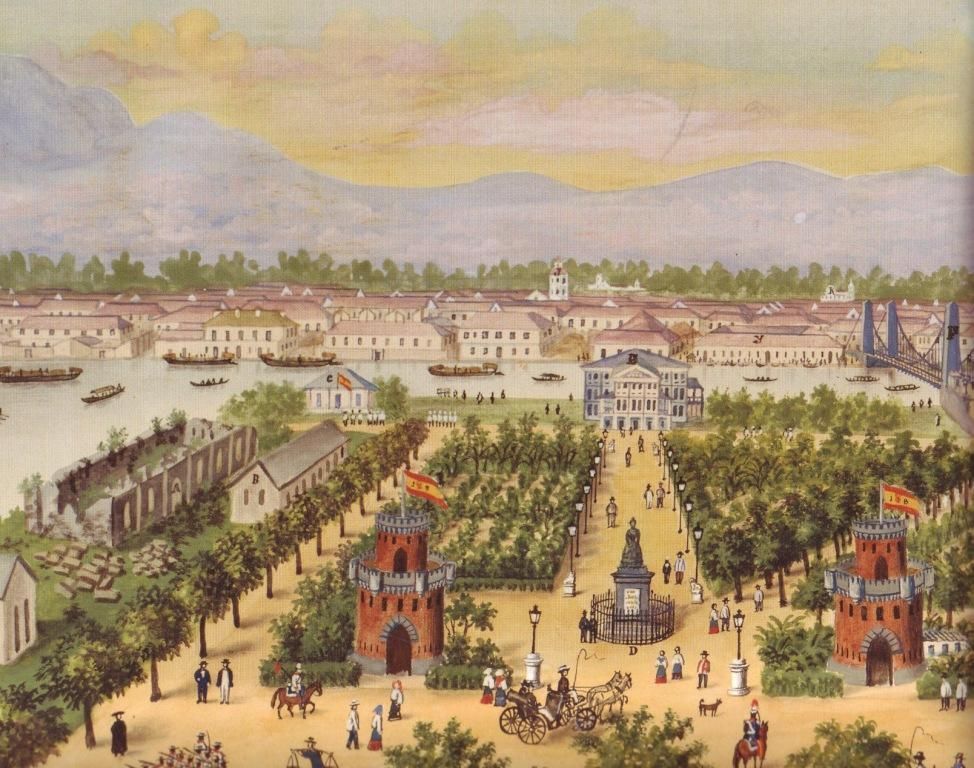
The monument’s early prominence was short-lived, as political upheavals in Spain cast a shadow over its legacy. The Glorious Revolution of 1868 saw the fall of Queen Isabel II and the rise of a liberal government that sought to dismantle symbols of the old regime. Carlos María de la Torre, appointed governor-general of the Philippines, ordered the statue’s removal. Bartolome Barretto, the official tasked with its destruction, refused out of loyalty to the Spanish monarchy. Instead, he hid the statue in his house until it was reclaimed by the Ayuntamiento. Subsequently, the statue was stored in the Casas Consistoriales, where it languished under the watch of a government increasingly ambivalent about its colonial legacy.

By 1896, amidst a resurgent Philippine Revolution, the statue was relocated to Malate Church. There it stood for more than fifty years, witnessing the tumult of Philippine independence and the upheavals of the 20th century. However, Typhoon Yoling in 1970 felled the monument. Five years later, the statue was restored and moved to its current location in Intramuros during a visit by then-Prince Juan Carlos of Spain. The move symbolized a renewed diplomatic relationship between the Philippines and Spain, highlighting a shared, albeit fraught, history. The area where the statue stands today is largely concealed by overgrowth, and the view of the Pasig from the plaza is blocked by government buildings, making it easy to overlook while driving toward Intramuros. When I asked students from a nearby university about the monument’s history, not one could provide an accurate answer.
Perhaps the monument to Queen Isabel’s repeated relocation is a good anecdote to the layered histories of Manila’s urban landscape, reflecting shifts in identity, governance, and public memory.
References
Torres, Jose Victor. Ciudad Murada: A Walk Through Historic Intramuros. Vibal Publishing House, Inc., 2005.
 Geronimo Cristobal