On John Steinbeck’s The Pearl and the bizarre Pearl of Lao Tzu

First edition of this classic story of simplicity, based on a Mexican folk tale. Octavo, original cloth. Fine in a very good variant dust jacket with Steinbeck looking to the right. Drawings by Jose Clemente Orozco.
By the time John Steinbeck published The Pearl in 1947, his reputation as a chronicler of the dispossessed was well established. The Grapes of Wrath had cemented his place as a writer who could capture the harsh realities of those on the fringes of society. In The Pearl, however, Steinbeck shifts his focus from the itinerant workers of California’s Dust Bowl to a modest coastal village in Mexico. This novella, more parable than novel, offers a compressed vision of Steinbeck’s worldview: that wealth, or even the promise of it, is a corrupting force that dismantles lives.
The story centers on Kino, a poor pearl diver, whose discovery of a magnificent pearl fills him with dreams of a better future for his family. Living with his wife, Juana, and their infant son, Coyotito, Kino is trapped in a life of subsistence, where the oppression of colonial power—embodied by the church, the doctor, and the local merchants—leaves him powerless. The pearl he finds in the shimmering waters off the Gulf offers a way out: the chance to escape poverty, to marry Juana in the church, to send Coyotito to school, to own a rifle. But as Kino clings to these dreams, the pearl’s promise darkens.
“There it lay, the great pearl, perfect as the moon”
Steinbeck’s prose, though sparse, is rich with symbolism. The pearl, gleaming and flawless, quickly shifts from being a symbol of hope to one of peril. As Kino seeks to sell it, he is surrounded by the greed and envy of others—neighbors, buyers, and even his family fall under its spell. Kino’s obsession grows, and the pearl becomes not just an object of desire but a reflection of his own struggle for dignity. His hopes for the future take on a manic edge, and Steinbeck paints a portrait of a man driven to paranoia, violence, and, ultimately, ruin.
While The Pearl is often read as a moral fable about the dangers of greed, it is also a subtle critique of the systems that perpetuate inequality. Kino’s poverty, Steinbeck suggests, is not just economic but spiritual, a condition imposed by the same colonial forces that dismiss his humanity. The pearl, which Kino believes will free him, instead tightens the chains around him, isolating him from Juana, from his community, and even from himself. His descent into obsession—culminating in the death of his son—feels like a grim inevitability, a fate sealed the moment he clutches the pearl to his chest.
Yet the moral simplicity of Steinbeck’s novella, with its heavy-handed symbolism and didactic tone, can feel somewhat reductive. Kino’s story is compelling, but Steinbeck’s insistence on the destructive nature of wealth can verge on the simplistic. The reader is left with little room to interpret the pearl as anything other than a cursed object, and the lack of nuance can make The Pearl feel more like an extended parable than a fully realized narrative.
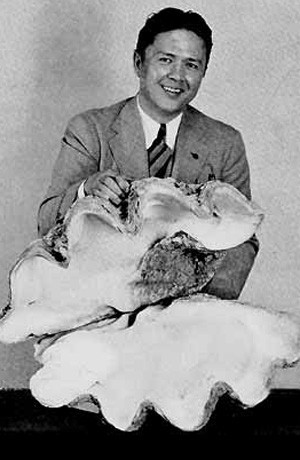
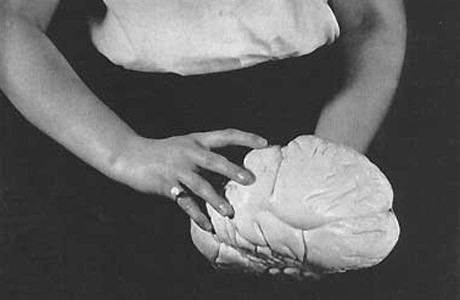
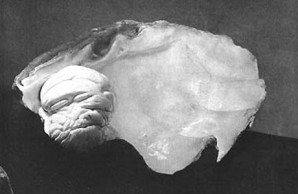
It is precisely in this allegorical quality that The Pearl resonates with other tales of fateful discoveries—one in particular comes to mind: the story of the Pearl of Lao Tzu, a giant pearl found off the coast of Palawan in the Philippines in 1934. Legend has it that a diver drowned retrieving the pearl, his body trapped in the shell of a giant Tridacna clam. When the clam was pried open, the local chief marveled at the massive pearl, said to bear the image of the Prophet Muhammad. The chief refused to sell it, declaring that such a pearl, earned through sacrifice, could not be bought with money.
The pearl’s legend continued to grow. In 1939, an American named Wilburn Cobb acquired it after curing the chief’s son of malaria. Cobb took the pearl to New York, where it became the centerpiece of an exhibition at Ripley’s Believe It or Not. There, a second legend emerged: a Chinese gentleman identified the pearl as the long-lost Pearl of Lao Tzu, a Taoist relic from 600 BC. Cobb, like Kino, refused to sell, though he was offered enormous sums. The value of the pearl soared to mythical proportions, and though its origins were eventually revealed as part-fact, part-fable, the aura surrounding it remained intact.
The story of the Pearl of Lao Tzu shares striking similarities with Steinbeck’s tale. Both pearls are discovered in moments of peril—one diver drowning, the other narrowly escaping death—and both are imbued with mystical or religious significance. The legends that surround them inflate their worth, but they also bring calamity. Just as Kino’s obsession with his pearl leads to the destruction of his family, Cobb’s attachment to the Pearl of Lao Tzu becomes a lifelong fixation. Cobb’s pearl, like Kino’s, is a poisoned gift, a treasure that promises wealth and glory but brings only heartache and loss.
Steinbeck’s novella and the real-life legend of the Pearl of Lao Tzu converge in their portrayal of human ambition and the destructive allure of wealth. Both pearls are surrounded by forces—spiritual, social, and personal—that trap their finders in webs of greed and paranoia. Whether in Steinbeck’s fictional coastal village or in the hills of Palawan, the lesson remains: the things we desire most are often the very things that destroy us.
In the end, The Pearl offers a stark reflection on human nature and the perils of ambition. Steinbeck gives us a world in which wealth cannot be divorced from corruption, and even the purest dreams are stained by the shadows they cast. Kino’s final act—throwing the pearl back into the sea—feels both inevitable and tragic, a futile gesture in a world where the poison of wealth can never fully be escaped. Like Cobb, Kino is left with nothing but the memory of a pearl that promised everything but delivered only despair.
 Geronimo Cristobal