Heritage issues in recent archaeological discoveries on Siniyah Island
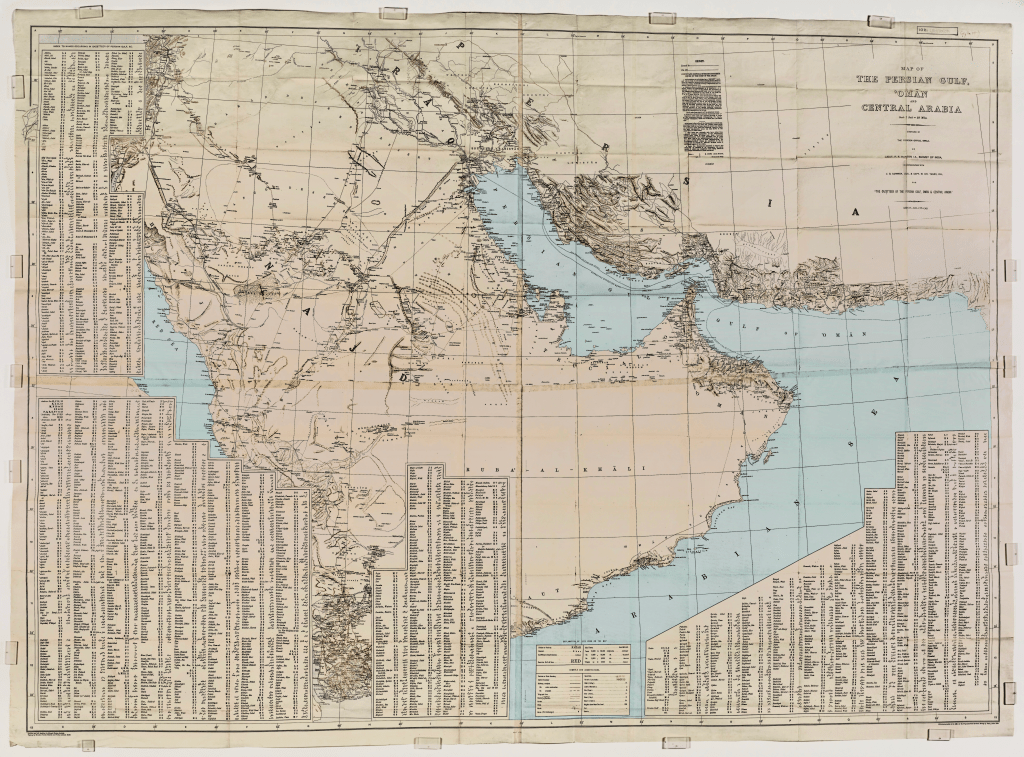
Map of the Persian Gulf, ’Omān and Central Arabia part of Gazetteer of the Persian Gulf, Oman and Central Arabia
This essay considers discussions of heritage politics around the discovery of three archaeological sites in the United Arab Emirates. In 2022, an ancient Christian monastery dating to the pre-Islamic era in the Arabian Peninsula was discovered on Sinniyah Island, 30 miles northeast of Dubai. Five years prior, the world’s oldest known pearl was found on Marawah island in the Persian Gulf, off the coast of Abu Dhabi. At about 8,000 years old, the artifact represents a history of pearl trading in the region stretching back to the Neolithic era. This year (2023), archaeologists discovered the Persian Gulf’s first known year-round pearling settlement on Siniyah Island. Villages like this one were mentioned in ancient literature, but their existence had never been confirmed by archaeological evidence. Aside from combing through the evidence for pearling and religious activity cited in existing studies, my analysis will seek to traverse intersections in the ideology of archaeological practice, the discourse about creation of national identity, and distortions in touristic and commercial visual culture. The pearl trade spanning the Gulf region and the Indian Ocean will be reviewed, to set in context a future examination of the heritage of pearls in the Emirates. I will conclude by examining the iconography of the pearl and its significance on the continuing reinvention of Dubai, which grew from a small fishing village in the early 19th century into a regional trading hub with a focus on tourism and luxury in the late 20th and early 21st centuries.
 Geronimo Cristobal