Book Review of Cebuano Sorcery: Malign Magic in the Philippines
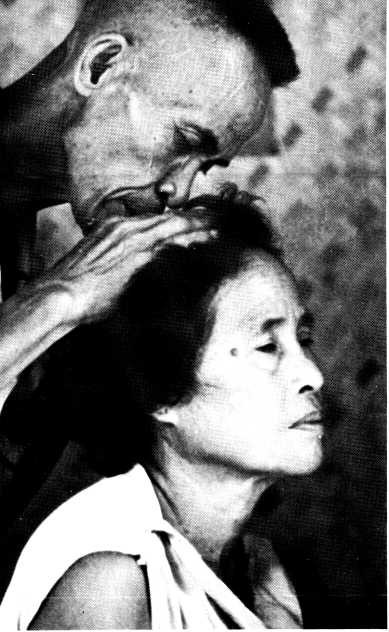
The practice of witchcraft in the Philippines has long fascinated observers, with early Spanish explorers documenting its prevalence among locals who employed sorcerers to inflict illness on adversaries through magic. By the 1960s, anthropologist Carl Lieban noted that such practices were still deeply rooted in the Visayan region, particularly where Cebuano is spoken, despite centuries of colonial influence under Spain and the United States, the ravages of World War II, and modernization efforts by the Philippine government. Cebuano Sorcery offers a concise yet comprehensive examination of this enduring phenomenon, exploring the societal roles of sorcerers and witches, their self-perceptions, and the intricate web of local beliefs surrounding health, illness, and social conflict.
At just 150 pages, the book delves into the dynamics of sorcery in urban and rural Cebuano communities, highlighting how sorcerers often straddle the roles of healer and harm-doer. It examines the interplay between suspicion, aggression, and sorcery in regulating social tensions, showing how these practices persist even in the face of modern medical advancements. In the early 1960s, for instance, residents of Cebu and Negros often sought sorcerers’ help over physicians, particularly for ailments perceived to be caused by supernatural forces. The distinction between “natural” and “supernatural” illnesses was clearly understood, even if beliefs about sorcery varied widely across individuals and communities.
Lieban’s anthropological approach remains neutral on the efficacy of sorcery from a Western perspective, instead prioritizing Cebuano interpretations and practices. The book’s analysis extends to the broader implications of sorcery as a form of social regulation, particularly in contexts where state laws and formal legal systems are limited. Sorcery, or even the fear of its potential, can mitigate violence, empower the marginalized, and maintain social order. Interestingly, the study concludes that sorcery’s prevalence diminishes with the accumulation of new wealth and consumer culture but rises in situations where fears of wealth redistribution emerge—a compelling insight that resonated in the Cold War era and remains relevant in discussions of social inequality today.
Cebuano Sorcery combines concise prose with rich ethnographic detail, offering insights into the intersection of medical anthropology, Filipino cultural practices, and the broader socio-political dynamics of belief systems. It serves as a valuable resource for scholars of Southeast Asia, religion, and social conflict, bridging historical observations with enduring questions about power, identity, and resilience in the face of cultural and economic transformations. Even decades after its publication, the book continues to shed light on how traditional practices adapt and persist in modernizing societies, enriching our understanding of the complexities of human belief and behavior.
 Geronimo Cristobal
Leave a comment