Reading some of Olga Tokarczuk greatest hits
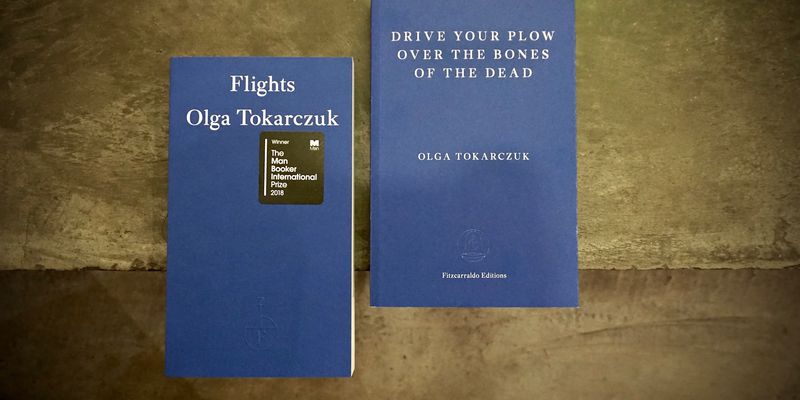
Polish author Olga Tokarczuk once compared her books to music videos. This analogy applies both to her collection of short stories and novels: They are self-contained, and the narratives are dense and short, so there is not even a moment of digression. The narratives vividly construct imaginative vignettes of ordinary situations, which – delicately portrayed – turn into somehow essential and unusual.
The story “Cabinet of curiosities” tells the story of a mysterious attraction of a couple, who can only live their lives within wooden walls. The truth of their love is also confined only in that space. “Inside it did not matter what time of day, what season, which year it was. It was always velvet. I fed on my own breath. “
In another story, a man creates a new world with a computer program. “Right at the beginning he had to eliminate the tendency to decay and ruin. In this game, one would be able to create a flawless world all over again. “But his efforts to make this virtual cosmos perfect, or at least better than reality, fail with every attempt, forcing him resign and give up his dream.
A maid is drawn to the history of the guests when cleaning hotel rooms: “I feel like a nurse and I like that. I connect the bed injured by nocturnal insomnia, wash the saps from the table top, remove the bottles from the body of the room, as if I were pulling out thorns. “
A woman appears in the dream of her great love. And dreams are “never mistaken, only reality does not live up to the order of dreams.” When she wakes up, she searches out her dreamed-up name in the telephone book and goes in search of a man she has never seen before. Then she finds him. And loses him or did she really find him?.
A German wants to see his homeland in Poland again and dies peacefully right on the border: “One leg he had in the Czech Republic, the other in Poland. So maybe he sat for an hour and died, second by second. […] He did not know when he died, because it did not happen all at once, but gradually everything in him is broken apart.
A man is forced to eat human flesh during the war. Years later he survives and finds a sentence from Plato denying the humanity to anyone who has tasted of “human innards.” So the man turns into a werewolf.
There is also a story about a small shop during Christmas and the search for a father for an illegitimate child.
These stories can be called her “the greatest hits” because the stories lack the subliminal connection that would have been necessary to understand the book as a whole in view of Tokarczuk’s novels already published in English. The order of the stories is arbitrary. But there are actually little pearls that have been thrown together here. Therefore, this narrative volume is suitable both for those who have yet to be initiated into the world of Tokarczuk’s books as well as for reading a few fables on dark and cold nights as winter approaches.
 Geronimo Cristobal
Leave a comment